Operations | Monitoring | ITSM | DevOps | Cloud

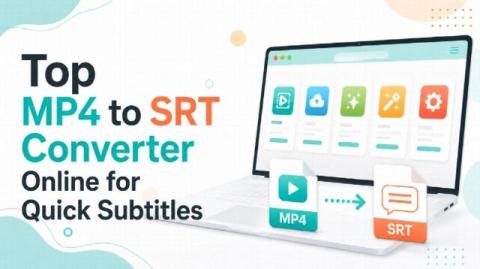
Top MP4 to SRT Converter Online for Quick Subtitles

Installing a dedicated video editor to extract subtitles from an MP4 file wastes time and disk space. When you need a quick caption file for a single upload, running the task inside your web browser is much simpler. A reliable online MP4-to-SRT converter turns video speech into structured timecodes without requiring local software installation.

Protecting Attention in High Pressure IT Operations

IT operations teams work in an environment where attention is constantly divided. Alerts, dashboards, tickets, chat messages and unexpected requests all compete for the same limited mental capacity. Even when no major incident is active, the effort of monitoring several channels can create a steady background load that makes careful decisions harder.

5 Best AI Tools for Solo Filmmakers Doing Every Role Themselves

A solo filmmaker is writer, director, DP, casting director, editor, and sound designer at once, not because that's the ideal way to make a film, but because there's no budget for anyone else. The tools that actually help aren't just cheap, they're the ones that reduce how many of those roles one person has to execute manually. This guide covers five AI tools genuinely useful for a solo filmmaker handling every role alone, from a platform that simulates an entire crew to tools that cover one specific job well.

5 Best AI Tools for Fast, High-Volume Microdrama Production

A microdrama season doesn't need one great episode, it needs sixty to a hundred of them, produced on a schedule that doesn't leave months of runway. Volume is the actual constraint most of the time, not whether any single episode looks good in isolation. This guide covers five AI tools genuinely built for speed and volume specifically, not just quality, for a team that needs to produce a lot of finished episodes fast.

Best AI Tools for Consistent Character Voices, Not Just Faces

Most character-consistency conversations are really about faces, a locked reference sheet, a checked proportion, a matched wardrobe detail. Voice gets treated as an afterthought, generated separately, checked less carefully, and drift there is just as noticeable as a face that's subtly wrong, even though it gets far less attention. This guide covers the AI tools genuinely useful for holding a character's voice consistent, not as a separate task bolted onto visual consistency, but as part of the same character identity.

Best AI Tools for Virtual Production and Digital Sets

Virtual production used to mean an LED volume and a real-time rendering team, a genuinely expensive way to put an actor in front of a digital environment. AI has opened a cheaper path to a similar result: generating a full digital set, or extending a partial physical build into one, without the volume itself. This guide covers the AI tools genuinely useful for virtual production and digital set work, from a full production platform that can generate and move a camera through a digital environment to tools built for building the environment itself.

The End Of Cloud-First: What's Driving The Shift To Hybrid Infrastructure

For more than a decade, the prevailing wisdom in enterprise IT was simple: move everything to the public cloud. Hyperscale platforms promised unlimited scalability, lower costs, agility and freedom from the burdens of managing infrastructure. Cloud-first has been rapidly gaining momentum as the de facto path to a modern digital footprint. Until now.

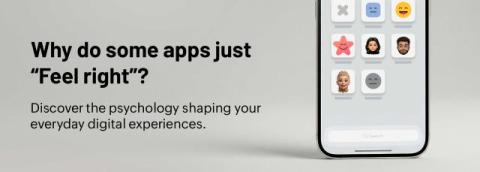
The psychology behind the apps we use every day

Have you ever opened a new app and immediately known what to do? You know where to click, what an icon means, and somehow everything feels exactly where it should be. Then you open another app and spend several minutes looking for a basic setting, navigating confusing menus and wondering why something so simple feels so difficult. What makes the difference? It isn't always the technology. Often, it's psychology.

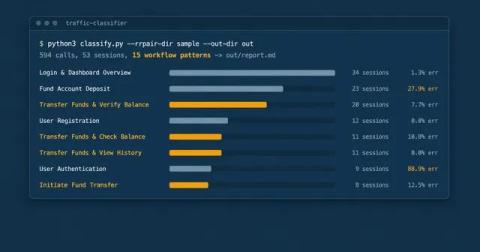
I built an API traffic classifier for business workflows

An engineering leader asked me a question a few weeks ago: could we read their business workflows out of API traffic instead of asking people to document them? I said it should be possible. Then I tried it. A few engineers know how the system really works. They know which calls make up a work order and which checks happen after a write. That stuff rarely makes it into the test plan. Usually it’s in somebody’s head. Sometimes it’s in several heads, with slightly different answers.

Zero-Code Instrumentation in Kubernetes Without the Instrumentation CRD

The OpenTelemetry Operator changed how teams approach telemetry collection in Kubernetes. The core appeal of zero-code instrumentation is that you can bring up telemetry inside application containers to collect traces, metrics, and logs without touching your source code or rebuilding your container images. However, if you follow the default OpenTelemetry Operator documentation, you quickly run into a heavy operational prerequisite: the Instrumentation CRD.