Operations | Monitoring | ITSM | DevOps | Cloud

Escalation Protocol: Criteria, Levels and Path Template

An escalation protocol is the written rule set that says when an incident moves from the person holding it to the next level, who that next level is, how they get contacted and how long they have to respond. It sits underneath the escalation policy (the why) and above the contact matrix (the who), and it is the document the on-call engineer actually reads at 3 AM.
ICMP Port Number: Why Ping Has No Port and What to Open

ICMP has no port number. It is an IP-layer protocol, number 1 in the IP header, that sits beside TCP and UDP rather than on top of them, so ping does not use a port and there is no "ping port" to open. When a firewall form asks for one, select the ICMP protocol and the echo request type instead. This post covers where ICMP sits in the stack, which types and codes you will actually meet, how to allow it through Linux, Windows and cloud firewalls, and when a ping check is the wrong check.

The August 13, 2026 Namecheap Outage

Namecheap took more than 5,000 servers offline on August 13, 2026 after cooling systems failed at RadiusDC's Phoenix datacenter, and brought services back in stages over roughly 28 and a half hours. The shutdown was deliberate, intended to protect hardware from overheating. It reached most of the product line - hosting, EasyWP, Private Email, DNS management, URL redirect management and the support helpdesk - while DNS zone resolution was unaffected.

Extending Cloud ALM for ERP Operational Success

SAP customers are navigating a period of significant change. Of course, there’s the transition to Cloud ERP and the scheduled end of standard support options for ECC in 2027 – these are well known. Basis professionals will be familiar with changes in support for Solution Manager and its components including monitoring and change management. Landscape Management has been formally discontinued after 2027. The natural assumption is Cloud ALM fills the gap.

Devart Excel Add-ins Extend Connectivity With New API, Security, and Data Support

We are thrilled to announce an update to our Excel Add-ins, bringing expanded support for popular cloud services and databases. The release introduces new objects, fields, API capabilities, and authentication options for BigCommerce, FreshBooks, HubSpot, NetSuite, QuickBooks Online, Zoho CRM, Oracle, MySQL, and PostgreSQL.

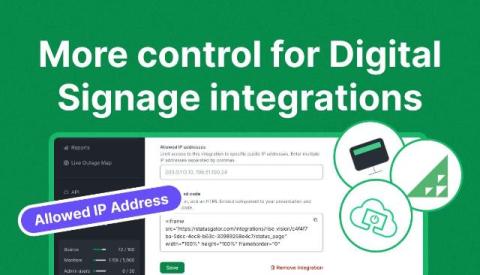
More control for Digital Signage integrations

We’ve made a small but useful update to our Digital Signage integrations in StatusGator. You can now configure Allowed IP addresses for your digital signage integrations. This lets you restrict access to specific public IP addresses – for example, the network used by screens in your office, operations center, or other shared space. Simply add one or more IP addresses when configuring the integration, and StatusGator will limit access accordingly.

NHS and healthcare data on UK Sovereign Cloud: A compliance primer

Healthcare data sits at the top of the sensitivity hierarchy. Patient records are personal data under UK GDPR. Medical records are separately regulated under sector-specific frameworks. Clinical research data may be subject to research-specific rules. Genomics data carries residency implications that go beyond standard personal data protections. NHS data specifically is governed by frameworks that add UK public sector expectations on top of the healthcare-specific ones.

Data pipeline monitoring 101: Tracking health and performance across the data stack

Data pipelines are systems for moving and processing data. They are made up of concatenated services and data stores that programmatically ingest data from upstream sources; filter, transform, enrich, and route that data; and deliver it to downstream consumers.

10 Best Real User Monitoring Tools Compared for 2026

Most IT teams learn their application feels slow when a customer complains. Server metrics never measure what a person on a phone waits for. The best real user monitoring tools close that gap by collecting timings from your users' browsers. Choosing one got harder this year, because the measurement standard moved. In this blog, we compare the best tools for real user monitoring, including their pros, cons, and key features. By the end you will know which one fits your stack.