Operations | Monitoring | ITSM | DevOps | Cloud

Managing Python Processes with PM2

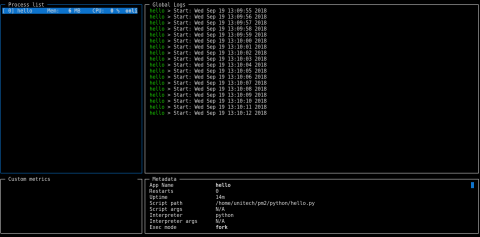
PM2 is a production-grade process manager that makes management of background process easy. In the Python world we could compare PM2 to Supervisord, but PM2 has some nifty features you might like. With PM2, rolling restarts, monitoring, checking logs and even deploying application has never been that simple. We really value CLI UX, so PM2 is really simple to use and master.


Monitoring Social Signals to Reduce Alert Fatigue With SignalFx and PagerDuty

“I need to be notified if there’s a significant event ongoing with SignalFx.” This is what I tell my team. However, despite being the CTO of a monitoring company, creating the right set of alerts for me to stay informed of incidents in progress or potential issues was harder than it seemed at first glance. Why?

Massachusetts Natural Gas Explosions - A Lesson in The Importance of Alert Automation

The pressure in the natural gas pipelines under three Massachusetts communities spiked to 12 times their normal level last week, just before the explosions and fires that destroyed dozens of homes and killed an 18-year-old man. Columbia Gas went under fire for their mismanagement of the incident. The NTSB says a Columbia Gas control room in Columbus, Ohio, registered pressures of 6 pounds per square inch last Thursday in pipelines that are intended to carry just 0.5 PSI.

Alert fatigue, part 2: alert reduction with Sensu filters & token substitution

In my previous post, I talked about the real costs of alert fatigue — the toll it can take on your engineers as well as your business — and some suggestions for rethinking alerting. In part 2 of this series, I’ll share some best practices for fine-tuning Sensu to help reduce alert fatigue.

Sentry + Microsoft Azure DevOps: Error-Tracking, Crash-Reporting, & More

Sentry is updating our key integrations for Azure DevOps (formerly VSTS). With these tightly-woven integrations, developers (like you) can unlock enhanced release tracking, informative deploy emails, and assignee suggestions for new errors. Route alerts to the right person based on the Azure DevOps commit that caused the issue, cutting remediation time to five minutes.

Connect Insights to Real-Time Action With PagerDuty Visibility

Have you ever gotten that dreaded text from your boss: “The site is down”? Maybe you were meeting with a customer. Or having dinner with your family. Maybe you were presenting at a conference. Doesn’t matter. Whatever else you were doing, now you’re doing emergency incident communication too. You check in with your team leads and confirm there is a problem. You let your boss know the response is under way.

How AI/ML Helps Retailers Keep 3 Promises This Holiday Season?

Another holiday season will soon be upon us, and many retailers and eCommerce businesses are already making plans. As you take inventory of what you learned last holiday season, let’s start with some lessons learned by the entire retail industry this time last year. In addition to stocking up on hot items and planning your promotions, the most competitive sites found that using AI/ML to optimize customer experience not only kept customers happy, it dramatically increased their revenues.

What Is Lambda Architecture? (for dummies)

From ancient Rome and Greece throughout Latin America and Egypt, there is only one thing beside the history itself that kept those ancient times alive even today – the architecture. The most important part of any era in our immersive history was the building of magnificent objects all around the world. These objects, even today, are some of the many wonders of the world.

Will Layer 3 Switches Give Routers the Boot?

Switches are the most common network device deployed on MSP-managed networks, while routers are the least popular—and not by a small margin. The data in Auvik’s recently published report, Managing Network Vendor Diversity: The MSP Challenge, shows switches represent almost half (48%) of all network devices on MSP-managed sites, while routers account for only 6% of the total. Does this mean the death of the router is imminent? In short, no—and here’s why.