
Operations | Monitoring | ITSM | DevOps | Cloud

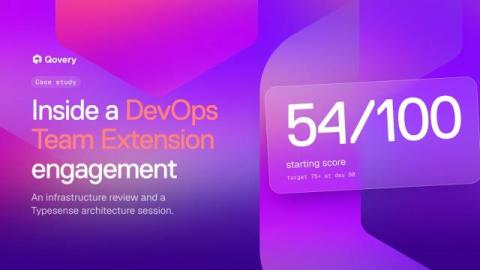
Inside a DevOps Team Extension engagement: an infrastructure review and a Typesense architecture session

How Qovery assessed a growing B2B SaaS company's infrastructure across about 150 controls, what the review with their team changed, and why a Typesense high-availability project turned into a sharding plan. Romaric founded Qovery to make Kubernetes accessible to every engineering team. He writes about platform strategy, developer experience, and the future of cloud infrastructure.
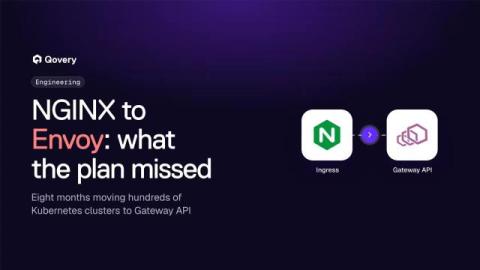
Replacing ingress-nginx with Envoy Gateway on Hundreds of Clusters: What the Plan Missed

In February we planned to move every Qovery-managed cluster from ingress-nginx to Envoy Gateway by the end of March. It took until October. Here is the rollout model, every class of problem we hit, and what I would do differently. Benjamin is a staff engineer at Qovery focused on infrastructure automation, Kubernetes internals, and building the deployment engine that powers thousands of clusters.

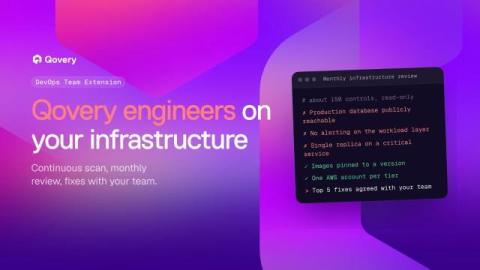
DevOps Team Extension: Qovery engineers watching your infrastructure every month

DevOps Team Extension gives growing engineering teams a named Qovery engineer, a continuous infrastructure scan, and a monthly remediation plan, so they can scale reliability, security and compliance without hiring a DevOps team first. Romaric founded Qovery to make Kubernetes accessible to every engineering team. He writes about platform strategy, developer experience, and the future of cloud infrastructure.
SecureBridge 12.1, EntityDAC 4.1, and dbExpress drivers: Support for RAD Studio 13 Florence Release 2, SQL Server 2025, and MySQL 9.7

New versions of SecureBridge, EntityDAC, and dbExpress drivers are out. All three now work with RAD Studio 13 Florence Release 2 and offer improved support for the Arm64EC target platform. Devart dbExpress drivers also add support for Microsoft SQL Server 2025 and MySQL 9.7, while SecureBridge gains SFTP upload resume, multipart/form-data support, and a new SSL/TLS demo.

10 Best AI Logging Tools in 2026: Features, Pricing & Comparison

As businesses increasingly integrate artificial intelligence into their applications and workflows, understanding what happens behind the scenes of these AI systems has become essential. AI-powered chatbots, large language models (LLMs), and autonomous AI agents can process thousands of requests, interact with external applications, and execute complex tasks. However, when something goes wrong, identifying the source of the problem isn’t always straightforward. Was the AI response incorrect?

8 Best AI SRE Tools in 2026 for Incident Investigation and Reliability

The best AI SRE tools to evaluate in 2026 include Sherlocks AI, Resolve AI, Traversal, Cleric, Rootly AI SRE, Komodor Klaudia, Datadog Bits Investigation, and Dynatrace Intelligence. Each addresses a different part of reliability work, from investigating alerts across multiple systems to diagnosing Kubernetes failures or validating production changes. Choosing the right tool starts with a practical question: where does your team lose time during an incident?

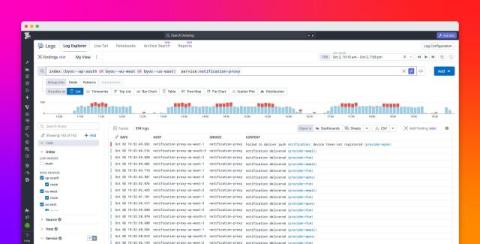
Unify data across Datadog BYOC with cross-cluster queries for teams and AI agents

Organizations may need to keep data in specific regions or infrastructure they control, whether because of data residency requirements, internal policies, or transfer costs. Datadog Bring Your Own Cloud (BYOC) extends the Datadog platform into those environments. Each BYOC deployment runs as a Kubernetes cluster with its own object storage, keeping data close to its source.

Building Reliable IT Infrastructures

Downtime is expensive, and it’s getting harder to avoid. Every year, enterprise IT environments grow more distributed, dynamic, and difficult to maintain with legacy tools and manual processes. With unplanned outages costing enterprises nearly $25,000 per minute, establishing and maintaining a resilient IT infrastructure is essential. Enterprises have already invested heavily in resilient architecture.

What Is High Availability? How It Works and How Many Nines You Actually Need

High availability (HA) is a system’s ability to keep serving users when individual components fail, from a single server up to a whole cloud region or provider. It is measured in nines: 99.9% allows about 8 hours 46 minutes of downtime a year, 99.99% about 52 minutes, and 99.999% about 5 minutes 15 seconds. HA works by removing single points of failure through redundancy, health checks, automatic failover, and replicated data.