Operations | Monitoring | ITSM | DevOps | Cloud

Coroot at Nerdearla & Percona University

In September 2026, Coroot headed off to South America for three events: Percona University, Nerdearla, and KCD Argentina. Percona University was a great opportunity to connect with the local open source database community in Montevideo, Uruguay. Hosted by Coroot partner Percona, the free educational event covered a full day of entertaining talks on AI, observability, and emerging database tech.
6 Best Code Review Platforms for Jira Teams (2026)

Code review in a Jira-centric workflow can become a bottleneck fast. Pull requests pile up, context gets lost between your Git host and your issue tracker, and reviewers spend time switching tabs instead of reading code. The right code review platform should connect Git activity directly to the issues you’re tracking.

Don't Wait for Code Black Keep Patient Care Online

In April 2026, a cybersecurity incident at Signature Healthcare Brockton Hospital affected information systems across the health system. The hospital activated downtime procedures, diverted ambulances, and temporarily canceled chemotherapy infusion services. Nine days later, it lifted its Code Black status, although some systems and processes still required restoration. In September, Luminis Health reported a cybersecurity incident that left certain systems unavailable.

Juggling AI tools works, until it does not

This isn't a teardown. This stack is a genuinely reasonable way to start. An AI-first editor handles day-to-day writing. A terminal-based coding agent takes on tasks that need more autonomy: a full feature, a migration, a stubborn bug. A few scripts connect the pieces, trigger a run, and post a result somewhere. An observability tool checks what happened after the fact. Every part of that is a real, capable tool. For the first few months, on a small team, it works.

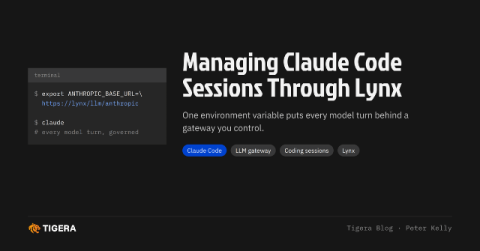
Managing Claude Code Sessions Through Lynx

At Tigera, we spend a lot of time thinking about agent security: identity, policy, runtime controls, and the record left behind after an agent acts. Coding agents create an interesting problem because, in most organizations, they didn’t arrive through the front door. Few companies ran a platform evaluation and rolled Claude Code out to 500 developers. Developers installed it themselves.

What is Interactive Application Security Testing (IAST)?

Interactive Application Security Testing (IAST) finds vulnerabilities in running applications by monitoring code from the inside. Learn how it works and where it fits. Interactive Application Security Testing (IAST) is a method for finding security vulnerabilities in an application while it's running, by instrumenting the code and observing how it behaves during normal use or testing.

Why Engineers Ignore Cloud Cost Optimization & Fixes

Learn why engineers ignore cloud cost optimization and how to build a culture of FinOps governance. See how Harness helps. Engineers often overlook cloud costs due to lack of visibility, fragmented tooling, and competing delivery priorities. Organizations can fix this by embedding FinOps guardrails into developer workflows and providing real-time cost feedback during build cycles.

SAST vs SCA vs DAST vs IAST: choosing the right scan for the right stage

SAST vs SCA vs DAST vs IAST: a clear breakdown of what each scan finds, when to run it, and how to combine them across your SDLC. Most AppSec teams don't run one type of scan - they run several, at different points in the pipeline, because no single tool sees the whole picture. This article breaks down SAST vs SCA vs DAST vs IAST: what each one actually tests, where it fits in the software development lifecycle (SDLC), and how to combine them without duplicating effort or drowning developers in findings.

How to Use Megaport Storage as a Veeam Backup Target

Learn how to use Megaport Storage as an S3-compatible Veeam backup target for scalable, private, offsite backup storage. Table of Contents A backup is only useful if it can be retrieved when needed. Where backups are stored determines how well they’re protected from incidents at the primary site, how long recovery transfers take, and what it costs to bring the data back.