The latest News and Information on Monitoring for Websites, Applications, APIs, Infrastructure, and other technologies.
With Internet Explorer on the brink of death and its Edge browser close to it with a 4% share of the user base, Microsoft has finally completed the shift of the software’s rendering engine to Blink, the foundation for Google Chrome. This makes Edge one of the latest in a growing family of Chromium based web browsers. But what does this mean for Windows users — and what special features of the new Edge are worth knowing about? That’s what we’ll be exploring in this article.
Today, we’re introducing a small but useful change to the Anomaly detection that configures which hosts the host triggers should listen to. Do you have a stroopwafel in your hand? Yes? Then let’s dig in.
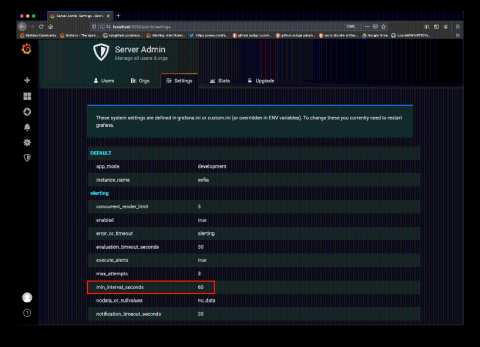
There has long been a request from administrators to have the ability to enforce a minimum interval between alert rule evaluations. This is useful for restricting unrealistic user-defined alert rules that evaluate too often and create unnecessary load in the backend. @Uepoch took the initiative and made all the necessary modifications for this configuration in Grafana’s backend, and we finally pushed it forward and introduced the feature in Grafana v6.6.
We are excited to announce the release of new versions of our two flagship products: SquaredUp for Azure version 4.5 and SquaredUp for SCOM version 4.5. Our product engineering teams have been working hard on the first big update since the launch of SquaredUp for Azure in November 2019, and have added some great new features and improvements based on customer feedback, including these beautiful cost visualizations…
Almost every business today runs online. The internet is one of the easiest avenues for businesses to reach users, and websites are a great way to impress your customers. So, when you’re building a web application for your business, it’s important that you make it the best version it can be. To make sure that your web application is good enough to impress customers and avoid any negative impact, you have to test your application and fix any issues.
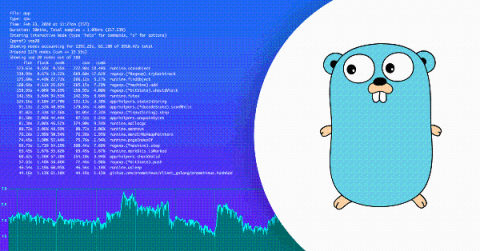
10 years ago, Google was facing a critical bottleneck caused by extremely prolonged C++ compilation times and needed a totally new way to solve it. Google engineers tackled the challenge by creating a new language called Go (aka Golang). The new language of Go borrows the best parts of C++, (most notably it’s performance and security features) and combines it with the speed of Python to enable Go to quickly use multiple cores while being able to implement concurrency.
Keeping your customers informed of the status of your website, application, or service is essential nowadays. If you don’t have a status page to communicate this, you’re missing an opportunity to improve transparency and reduce customer support burden. This is especially true if you are running an online business and your website is your main source of income, a status page is crucial not only for your business but for your customers as well.