Splunk SOAR Playbooks - AWS IAM Find and Disable Inactive Users
Splunk SOAR Playbooks - AWS IAM Find and Disable Inactive Users.


The latest News and Information on CyberSecurity for Applications, Services and Infrastructure, and related technologies.
At RapidSpike everyone gets involved with product and feature ideation, including our customers! We pride ourselves on being responsive to your needs, taking your feedback, and turning it into our next great feature — after all, you know what you need. We’re here to listen and our developers love tackling a new challenge and solving a tricky problem. This has trickled down into one of our latest features — Configurable Assurance Alerts.
Mixing your personal and work devices while connected to your home network and accessing the Internet is a risky proposition from a security and privacy standpoint. Why? I frequently monitor my firewall logs. What I observe on my WAN interface are blocked IP addresses sourced from adversarial nation states which makes the hair on the back of my neck stand up.
We have released a new upgrade to our script editor which is part of our ongoing commitment to build the best Synthetic User Journey monitoring tool on the market – Journey Pre-Actions. This upgrade is simple but will be useful for those websites that require certain prerequisites in order to allow tests such as these to be run. As with many of our features here at RapidSpike, this was born from a real-world requirement from a number of our customers.
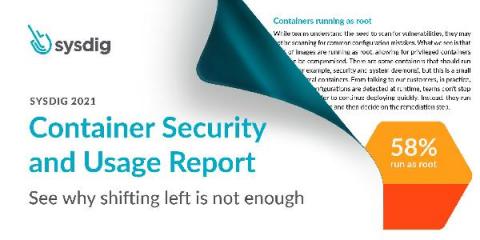
The fourth annual Sysdig container security and usage report looks at how global Sysdig customers of all sizes and industries are using and securing container environments. By examining how and when organizations are implementing security in the development lifecycle, we have been able to uncover some interesting data points in this year’s report. For example, we can see that 74% of organizations are scanning container images in the build process.