Operations | Monitoring | ITSM | DevOps | Cloud

Best AI Infrastructure Providers for Power, Cooling, and Compute

AI infrastructure is becoming a facilities problem as much as a compute problem. Adding accelerators is only useful when the surrounding environment can support them. Power has to reach the rack reliably. Cooling has to remove the heat produced under sustained load. The network fabric has to keep accelerators communicating. Storage has to feed the workload. Orchestration and monitoring then determine whether expensive capacity spends its time doing useful work.

SAP Observability Tools Compared

Comparisons of SAP observability tools often evaluate which platforms can see inside SAP.Today, that’s nearly all of them. Dynatrace, Datadog, New Relic and Splunk can all get SAP telemetry. None of them are likely the best choice for an SAP-centric application, and we will document why. The questions teams evaluating SAP observability solutions should consider: That last one is where most of these platforms stop, and it is the difference between observability and operations.

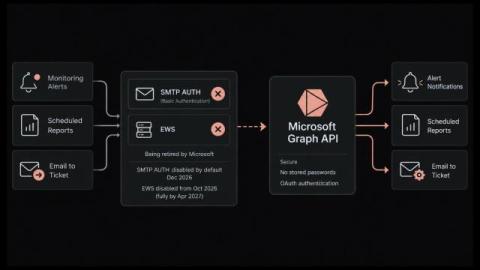
Moving Alert and Email-to-Ticket Mail off SMTP AUTH to Microsoft Graph API

Every monitoring alert, scheduled report, and email to ticket conversion in your stack depends on a mailbox. Most monitoring and helpdesk management tools still reach that mailbox the old way. They log in with a username and password over SMTP or EWS. Exchange Online is closing both doors on a published schedule. The tools that fail will fail silently. In this blog, you will: By the end, you can run the change on a weekday afternoon and know nothing went quiet.

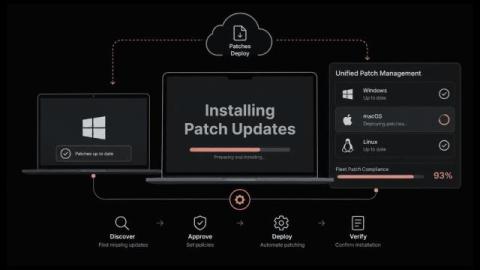
macOS Patch Management for Mixed Windows and Mac Fleets

How many Macs in your environment are running an OS build that your patch compliance report has never counted? In most mixed Windows and Mac deployments, the Windows side is managed by policy and the Mac side is managed by hope. Designers, executives, and engineering leads install updates when a notification interrupts them, and otherwise dismiss the prompt for months.

How Federal IT Teams Prepare for FIPS 140-2 Historical Status Before It Delays Authorization

September 22, 2026 is not an operating system shutdown date. It is a cryptographic compliance transition that changes what federal organizations can use for new systems and what they must defend in existing ones.

HITL for autonomous agents: Where does the human go?

Human approval is easy when you are sitting in front of the agent. For an agent running by itself in a cluster, almost none of that holds. You’re in a meeting and your agent is running in a cluster. It has a service account, it has been asked to keep a service healthy, and it has just worked out that the right fix is to roll back a database migration. Nobody is watching it. That was rather the point of deploying it. You want to get notified to approve such an important action.

What is New in Flowmon 13.1 and Flowmon ADS 13.1

Improvements to the Progress Flowmon product family continue, and we are pleased to announce the release of Flowmon 13.1. The latest 13.1 release builds on the strong foundations we laid in Flowmon 13. Headline enhancements include a rebuilt visualization layer, automated investigation workflows and a set of AI-assisted capabilities in the Flowmon Anomaly Detection System (ADS). And the Flowmon team is eager to share how your team can utilize these new capabilities.

It takes a hacker 48 hours to exploit a vulnerability. Why does it take 43 days to patch it?

It is not always possible to patch vulnerabilities as quickly as hackers exploit them, but recent figures show just how much this gap has widened. FortiGuard Labs estimates that the time between the disclosure of a critical vulnerability and its active exploitation has dropped sharply to between 24 and 48 hours. By contrast, Verizon’s 2026 Data Breach Investigations Report shows that organizations take a median of 43 days to complete vulnerability remediation.

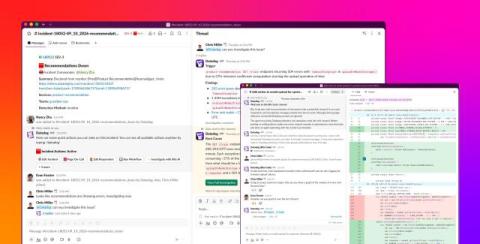
From alert to resolution: Manage incidents with Bits Chat in Slack

When an issue in production triggers an alert, the people responding to it are often working in Slack while the evidence they need is elsewhere. Responders need to move between conversations, telemetry data, source code, and incident tooling as they form hypotheses, coordinate actions, and keep stakeholders informed. That context switching can slow down a time-sensitive investigation and make updates harder to follow.

Anomaly Detection Is Now Generally Available

You set a threshold alert on a checkout endpoint at 500ms. It pages you every Monday at 9am, when traffic doubles and nothing is actually wrong. You raise the threshold to 800ms to make the noise stop. Three weeks later a real regression creeps in at 650ms, and nobody gets paged, because you tuned the alert to survive Mondays instead of to catch problems.