Operations | Monitoring | ITSM | DevOps | Cloud

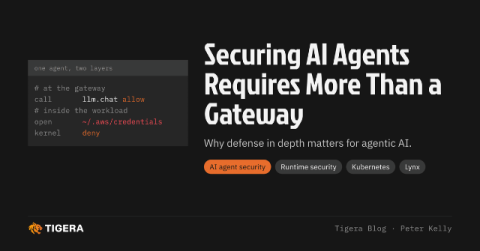
Securing AI Agents Requires More Than a Gateway

Over the past year, I’ve spent a lot of time talking with engineering and platform teams about how they’re deploying AI agents. The conversations are changing. Six months ago, most were focused on getting agents into production. Now, increasingly, the question is how to secure them once they’re there. It’s a familiar transition. We’ve seen it with containers, Kubernetes, microservices, and cloud infrastructure.
Calico on Red Hat OpenShift 5: One Network and Security Model for Containers, VMs and AI

We’re pleased to announce that Calico is supported on Red Hat OpenShift 5, the latest version of the industry’s leading hybrid cloud application platform powered by Kubernetes. Tested and validated to run on Red Hat OpenShift 5, Calico delivers high-performance networking and zero-trust network policy for containers, virtual machines on Red Hat OpenShift Virtualization, and AI workloads, with one consistent policy model across the cluster.

Bindplane's AI Agent is now generally available, plus what else we're bringing to KubeCon NA 2026

KubeCon + CloudNativeCon North America is in Salt Lake City this week, and Bindplane will be at booth 253. Come say hi! We have four talks and we're bringing a ton of cool updates with us. So many of you were eager to try Bindplane Agent while it was in early access. That changes today. Bindplane Agent is generally available. If you've built pipelines in Bindplane before, you know the drill. Pick a source, pick a destination, add processors in the right order, fill in the settings, roll it out.

Rails 8.1.4.1 Is a Big Security Release. Upgrade This Week.

Rails 8.1.4.1 is a security point release, and it’s a substantial one. It carries around a dozen CVE-level advisories spread across Action View, Action Pack, and Active Support. There are no feature changes to weigh and no behavior most apps need to plan around, which makes this the easy kind of upgrade to justify: bump it this week. (The fixes were also backported to the 8.0 and 7.x series, so you don’t have to be on 8.1 to get them.)

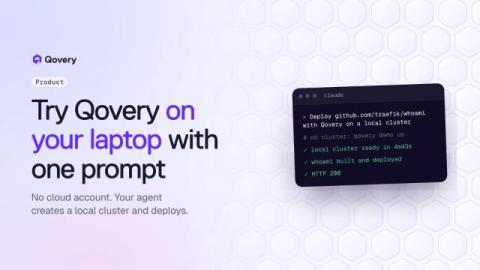
Try Qovery on Your Laptop: Ask Your Coding Agent, Get a Running App

The Qovery agent skills now create a free local Kubernetes cluster in Docker when your organization has none, then deploy your project to it. One prompt in Claude Code, Cursor or OpenCode, no cloud account, no credit card. Measured: 4 min 43 s for the cluster, 2 min 40 s to build and deploy a GitHub repository. Romaric founded Qovery to make Kubernetes accessible to every engineering team. He writes about platform strategy, developer experience, and the future of cloud infrastructure.

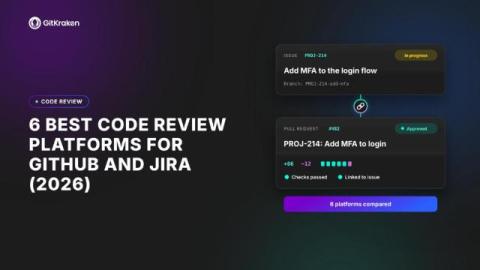
6 Best Code Review Platforms for GitHub and Jira (2026)

Your team runs on GitHub for code and Jira for planning. But when it comes to code review tools, those two worlds rarely talk to each other. Pull requests pile up on one side while issues stall on the other, and reviewers lose time switching between tabs to piece together context. GitKraken gives you a connected code review workflow that bridges GitHub and Jira, so your team spends less time chasing context and more time shipping.

Conductor is joining Meta. What that means if you run parallel agents

On November 4, Conductor announced it’s joining Meta. If you run your agents in Conductor, you probably saw the post that morning. I know I saw it when my coworkers started sharing the link in Slack. If Conductor was your main tool, this kind of sucks. You didn’t plan to go shopping for a new one this month, and 2 weeks to get off Cloud is pretty tight, especially if you built scripts around it.

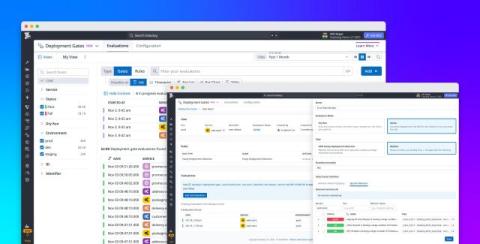
Catch incidents and pause faulty deployments automatically with Datadog Deployment Gates

As AI-assisted development helps teams create and ship more code, engineers need to check a growing volume of changes under real production conditions. Even code that passes testing can introduce errors or slowdowns in production, so early detection is essential to protecting customers. Automating those health checks helps teams keep pace by reducing the time engineers spend watching dashboards.

Investigate Kubernetes health and processes with the Datadog MCP Server

When investigating issues with a Kubernetes service, SREs and platform engineers need to understand what’s happening across its supporting infrastructure. For example, is a process still running? Did it restart? Is the scheduler struggling to place pods? Finding the answers to these questions often requires engineers to search process inventories, examine resource metrics, and query Kubernetes control plane telemetry.

Run cost-effective, always-on agents to monitor your environment: the engineering behind Watchers

Alert rules are great for the failures you can predict, but they fall short on the ones you can't. With the advent of modern AI, you might think the solution is to swarm your stack with agents that monitor every last detail, but that can quickly lead to astronomical bills. And those are the gaps Watchers fill: catching what alerts miss while keeping costs in control. Generally Available as of ObservabilityCON 2026, Watchers are always-on agents in Grafana Assistant.