StackStorm 3.1
StackStorm v3.1 is now available. This new release is focused on stability and bug fixes. As always, make sure you have backups first. Then follow the standard Upgrade Instructions.


StackStorm v3.1 is now available. This new release is focused on stability and bug fixes. As always, make sure you have backups first. Then follow the standard Upgrade Instructions.
Today we are very proud and happy to launch our latest non-supported release, CFEngine 3.14.0. 3.14 is a great number, being the closest we will get to PI, we also wanted to introduce something very special this time around, and we did!
CFEngine provides the services promise type to manage the state of a given service. services type promises are an abstraction of agent bundles, they can be used to declare the desired state for a collection of things identified by a name. Most commonly services type promises are used to manage standard operating system services though they can be used for abstracting other logical states.
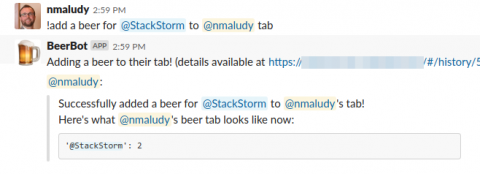
StackStorm can’t pour you a beer. But now it can keep track of who owes you a beer! Read on for more info about the new beertab pack, and other new packs & interesting StackStorm Exchange updates.
Orquesta is the new workflow engine in StackStorm. If you are on the fence choosing which workflow services to use from AWS, Azure, or GCP and you are thinking that this post is too long to read, then just skip ahead and run StackStorm.
The reliance on digital transformation and data is ever increasing for businesses to be successful in the current environment. The agility at which the business can respond to real-life situations is proportional to the level of digitization that has been implemented in the business. For a business to nimble and agile, it is imperative that all the processes be delivered as a digital service that can be provisioned, monitored and remediated as by an automation logic at the core of the business.
The CFEngine engineering team has recently discovered a severe security issue in the CFEngine Enterprise product. CFEngine is using some internal secrets for authentication to the Mission Portal API and the PostgreSQL database when running background maintenance tasks. These internal secrets are randomly generated during the installation process and stored in files which only the root user has access to.
A recent survey from Capgemini revealed that while enterprise-scale automation is still in its infancy, IT automation projects are moving along (below). IT is starting to view automation less tactically, and more strategically.
We are happy to release the 2nd update to the CFEngine 3.12 LTS series. This update comes with many important stability and performance improvements and is thus well worth the upgrade from an older version of 3.12 LTS. CFEngine 3.12 LTS brings a lot of innovation, new features and improved performance to CFEngine, and allows you to make the most efficient use of your time. We are looking forward to your feedback on this release.
We are now happy to release the 6th update to the CFEngine 3.10 LTS series. This update comes with many important stability and performance improvements and is thus well worth the upgrade from an older version of 3.10 LTS.