Operations | Monitoring | ITSM | DevOps | Cloud

The One Where We Meet Cribl Copilot

We’re kicking off our new live weekly product demo series—streaming on YouTube, X, and LinkedIn! Each week, we’ll dive into the latest features and hidden gems from the Cribl Suite of tools to help you unlock the full potential of your telemetry data. For our first session, we’re thrilled to welcome Nikhil Mungel, the visionary behind Cribl Copilot. This AI-powered assistant is designed to: Instantly surface answers from the documentation Build pipelines with just a simple request.

How to make your AI-as-a-Service more resilient

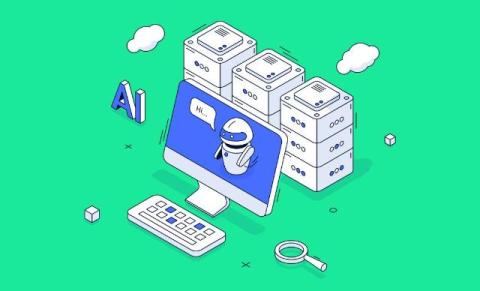
When you think about “AI reliability,” what comes to mind? If you’re like most people, you’re probably thinking of generative AI model accuracy, like responses from ChatGPT, Stable Diffusion, and Sora. While this is certainly important, there’s an even more fundamental type of reliability: the reliability of the infrastructure that your AI models and applications are running on. AI infrastructure is complex, distributed, and automated, making it highly susceptible to failure.

How AI is impacting Africa's connectivity landscape

Artificial Intelligence (AI) is reshaping industries worldwide, and Sub-Saharan Africa is no exception. Across the region, governments, businesses, and start-ups are recognising the potential of AI to drive economic growth, improve efficiencies, and enhance decision-making. Yet, as AI adoption accelerates, so does the demand for robust digital infrastructure, including high-performance computing, data centres, and connectivity.

Kubernetes for AI Workloads

Kubernetes has been facilitating container orchestration for around a decade for both stateful and stateless application workloads. With the recent rise of AI and the advent of tools like Kubeflow and Argo Workflows, Kubernetes is also becoming a first-class citizen when it comes to running AI workloads. When you are training a model on K8s, you may be tweaking many parameters and have to test each of them one by one.

CI/CD requirements for generative AI

CI/CD for generative AI applications presents unique challenges in model deployment, testing, and monitoring. Unlike traditional software applications, generative AI systems involve large model artifacts, complex dependencies, and specialized hardware requirements, making a sophisticated CI/CD pipeline essential for reliable delivery. As organizations embrace generative AI technologies, the need for specialized CI/CD solutions becomes critical.

AI Wearables: Why Startups Have the Advantage Over Big Tech

Big tech has the resources, but startups have the real advantage in AI wearables: speed, agility, and the freedom to take risks. Right now, the AI wearable market is in the wildcard phase—no dominant device, no set form factor, and no clear winner. That’s a massive opportunity for smaller teams that can move fast, test in the field, and refine in real time. Unlike big tech, startups don’t need a five-year roadmap. They can launch quickly, experiment aggressively, and pivot without worrying about shareholders.