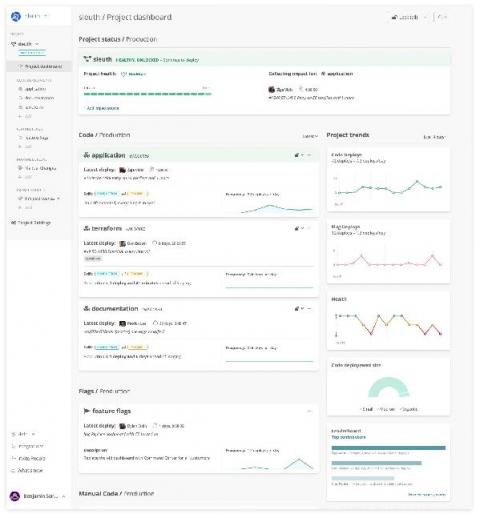
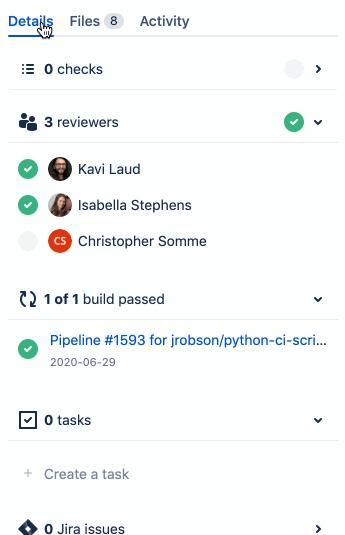
Today we’re excited to be rolling out a completely redesigned Sleuth experience. Our new Command Center provides one place to visit so developers can quickly and safely deploy new changes.
The adoption of cloud-based solutions has become increasingly common. The proof for this is evident – according to Gartner, Inc., the worldwide public cloud services market is expected to grow by 6.3% in 2020, up to a staggering $257.9 billion in value. The Flexera 2020 State of the Cloud Report, released on April 28, 2020, states that more than 90% of respondents have adopted cloud computing, with the top three cloud service providers being – AWS, Azure, and Google Cloud Platform.
I’ve recently started working on a new project to build a Discord bot in Go, mostly as a way to learn more Go but also so I can use it to manage various things in Azure and potentially elsewhere. I figured it’d be useful to document some of this project to give some insights as to what I’ve done and why. First up was setting up the CI/CD pipeline for it so that I don’t need to worry about it later and can save myself a bunch of time when testing.
At Cloudsmith, we are proud of our partnership network. We work hard to collaborate and integrate with the best DevOps tools available. Building performant, modern workflows requires frictionless integrations between tooling. Integrating Cloudsmith repositories with your CI/CD processes facilitates rapid development. Build, test, and deploy/distribute your software in repeatable, performant ways.
Now that we know the advantages of leveraging Ketch over other tools such as Helm to ease the deployment of our applications (BLOG: Helm vs. Ketch when Deploying Applications), a good next step is for us to understand how we can tie Ketch to our CI pipeline and have an automated deployment process. For this example, we will leverage Ketch, GitHub Actions, and a Kubernetes cluster on Google Kubernetes Engine (GKE).