Operations | Monitoring | ITSM | DevOps | Cloud

The latest News and Information on DevOps, CI/CD, Automation and related technologies.

Database Replications - Cloud 66 Demo

Database replication involves configuring a master and replica database architecture, whereby the replica is an exact copy of the master at all times. This feature is supported for MySQL, PostgreSQL, Redis and MongoDB. Database replication can be set up for a single application, between applications, or between database groups. What is Cloud 66? Cloud 66 gives you everything you need to build, deploy and maintain your applications on any cloud, without the headache of dealing with “server stuff”.
Database Backups - Cloud 66 Demo

Cloud 66 supports two types of backups: managed and unmanaged. Managed backups: Using managed backups has several benefits: The 100 most recent managed backups are kept by default. Unmanaged backups: Unmanaged backups are stored on your local server and are available under `/var/cloud66/backups`. The 10 most recent unmanaged backups are kept by default. We don’t charge for unmanaged backups. What is Cloud 66? Cloud 66 gives you everything you need to build, deploy and maintain your applications on any cloud, without the headache of dealing with “server stuff”.
EC2 Instance Types 101: The Definitive Guide For 2022

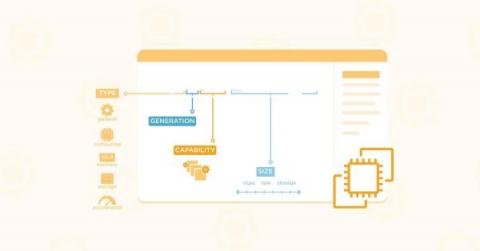
Yet, the same flexibility that makes EC2 so appealing can also make it complex, confusing, and unnecessarily costly. A good way to understand the compute service is to familiarize yourself with EC2 instance types, and what the best use cases are for each. This guide will cover that and more.

Your guide to Kubernetes Dashboards

As a developer, it can become challenging to manage Kubernetes and develop applications simultaneously. That’s why we put together this guide to show you how the Kubernetes Dashboard can help developers overcome this problem and get an overview of the cluster and its workloads. From this, developers can focus more on application development while stressing less on cluster management.

Everything I Wanted To Know About Kubernetes Autoscaling

Kubernetes is today the most well-known container scheduler used by thousands of companies. Being able to quickly and automatically scale your application is something standard nowadays. However, knowing how to do it well is another topic. In this article, we'll cover how pod autoscaling works, how it can be used, when it's exciting and not, and finally, we'll cover it with a Qovery usage we have internally.

Installing and Running Kubewarden In Air-Gapped Environments

We are excited to announce that deploying Kubewarden in air gap environments has been simplified and documented! For that, you will need a private OCI registry accessible by your Kubernetes cluster. If you’re unfamiliar with Kubewarden, it’s a policy engine for Kubernetes. Its mission is to simplify the adoption of policy-as-code. Kubewarden policies are WebAssembly modules; therefore they can be stored inside an OCI-compliant registry as OCI artifacts.

Fleet Introduces OCI Support for Helm Charts

Rancher, the open source container management platform, uses Fleet to enable its continuous deployment features. Fleet brings GitOps functionality to Rancher. Fleet in Rancher 2.7.0 can fetch Helm charts from OCI registries. Using OCI registries to store Helm charts is an increasingly popular storage method. It allows storing your charts in a registry alongside your container images. This unifies the storage options for charts and reduces friction. Using a chart in an OCI registry is fairly simple.

What is Azure Blob?

Today, data is invaluable. Many businesses store large amounts of it for everyday operations. Some information is stored in a hierarchical form, but companies must often hold significant amounts of data without any organization. The solution? Microsoft Azure’s Blob Storage. In this article, we’ll consider the key elements of Blob Storage, how it works, and why it’s important.