The management of modern software environments hinges on the three so-called “pillars of observability”: logs, metrics and traces. Each of these data sources provides crucial visibility into applications and the infrastructure hosting them. For many IT operations and site reliability engineering (SRE) teams, two of these pillars — logs and metrics — are familiar enough.
In the era of Microservices, Cloud Computing and Serverless architecture, it’s useful to understand Kubernetes and learn how to use it. However, the official Kubernetes documentation can be hard to decipher, especially for newcomers. In this blog series, I will present a simplified view of Kubernetes and give examples of how to use it for deploying microservices using different cloud providers, including Azure, Amazon, Google Cloud and even IBM.
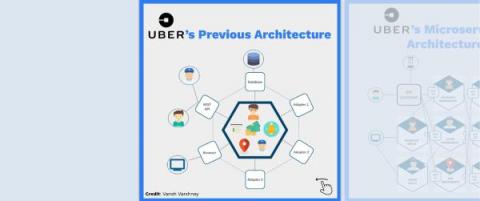
UBER’s Microservice Architecture 💡 Microservice Architecture is a framework that consists of small, individually deployable services performing different operations. Amazon, Netflix, Twitter, Uber, and many other high-growth companies are now shifting from a monolithic architecture into multiple codebases to form a microservice architecture.
IT Operations is experiencing lightning-fast change right now. From the emergence of cloud computing to the explosion of data—not to mention ever-present cyber threats—every day is a new day for IT Ops. At BigPanda, we’re laser-focused on making life easier for IT Ops teams, which means we’re staying on top of all this change to help IT Ops keep up.
Site Reliability Engineering (SRE) practice was established by Google nearly 20 years ago, and was popularized with Google’s monumental SRE Book. Everyone’s been attempting to follow that iconic path ever since.
In my prior blog, Continuous Test Data Management for Microservices, Part 1, we offered an introduction to the key approaches for applying continuous test data management (TDM) to microservices. The continuous TDM process for microservices applications is similar to that for general continuous TDM (see figure below), but tailored to the nuances of the architecture. In this post, I’ll outline the key steps for applying TDM across the lifecycle.