

Operations | Monitoring | ITSM | DevOps | Cloud

The latest News and Information on Monitoring for Websites, Applications, APIs, Infrastructure, and other technologies.

Sponsored Post

AI engineering for AI Error Resolution

Smart engineering teams are working out how to use Large Language Models (LLMs) to solve real business problems. At Raygun, we're no exception, and we're committing our time and effort to developing AI software applications that bring value to our customers. Our first AI-powered release is AI Error Resolution (AIER), a novel Crash Reporting feature that takes debugging with ChatGPT to the next level. We know that LLMs have already dramatically increased software engineers' productivity.
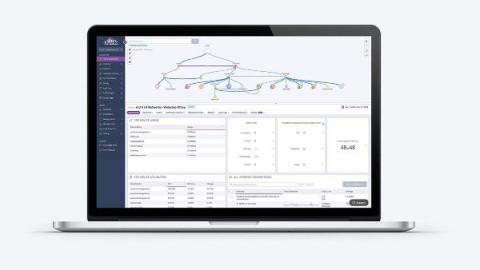
The Benefits of a Single Incident Management System

How many monitoring tools do you have? Chances are at least 2-3. One tool usually does not cover all cases, and it’s usually a combination of self-managed and managed tools. Self-managed gives you more control over custom configurations and cost. Managed ones take away the headache of running it yourself. Prometheus is the de-facto standard for monitoring these days if you have a modern application stack and you want to manage your own monitoring.

6 Common Spanning Tree Mistakes and How to Avoid Them

Let me start by saying that spanning tree is a Good Thing. It saves you from loops, which will completely shut down a network. But it has to be configured properly to work properly. I can’t count the number of times I’ve had a client call me, desperate with a terribly broken network, and I’ve responded, “Sounds like a spanning tree problem.” There are many ways things can go wrong with spanning tree. In this article, I’ve collected six of the recurring themes.

Network Basics: Spanning Tree Protocol

For new networkers, Spanning Tree Protocol (STP) can be an intimidating topic. Many old-timers speak of spanning-tree in ominous tones, recounting the time when a “spanning-tree loop” brought down the network. Some managers strictly forbid anyone from changing anything related to the spanning tree, fearing a resulting service interruption. Some of the fear surrounding spanning trees is likely based on bad experiences, but some are based on ignorance—at least partly.

How to Adjust TCP Window Size to Improve Network Performance

The TCP/IP protocol sometimes shows its age. It was invented in an era when networks were very slow and packet loss was high. So one of the main considerations in early protocol design was reliability. The Transmission Control Protocol (TCP) has built-in mechanisms for reliability that include validating a checksum on every packet, as well as detection and retransmission of dropped or out-of-order packets.

Accelerate Triage with DX NetOps Syslog Integration

Today, network operations teams encounter significant hurdles due to shortages of skilled personnel and fragmented toolsets. Despite consolidation efforts, it's common for teams to manage up to 15 different monitoring products. Research suggests that network professionals believe they could potentially resolve 53% of network issues by implementing improved network management tools.

5 useful transformations you should know to get the most out of Grafana

I’ve been a user of Grafana OSS for seven years, starting with Grafana 5.0. My, how things have evolved since then. The first time I used Grafana was to monitor a Kafka data pipeline with a bunch of Java Spring Boot microservices and Prometheus to extract metrics. I was amazed how much you could do with Grafana and Prometheus together, and so I always kept Grafana on my short list of places I wanted to put my energy, either as a contributor or by working directly for the company.

FOSS in Flux: Redis Relicensing and the Future of Open Source

In the past few years we’ve been witnessing tectonic shifts in the open source realm, with established projects taken off open source or otherwise turning to the dark side. On the other hand, we’ve seen active forks aiming to keep these projects open gaining momentum. What does it mean for the Free and Open Source Software (FOSS) movement? Is this a trend or just a passing wave? What can we learn from it as vendors and as a community?