The latest News and Information on Managed Service Providers and related technologies.
When thinking about your strategy around backups, recovery, availability, and business continuity, one part of the plan tends to fall by the wayside: backup retention. We focus so much on things like recovery objectives, SLAs, and tiers of data, that our thinking revolves around the need to potentially recover the backup that we just made a matter of minutes afterward. But there are data sets that need to be available weeks, months—even years—after they are made.
Cybersecurity is a top concern among businesses, especially as the number of cyberattacks, data breaches, and malware infections continue to grow each year. These attacks can happen at any moment during the day, too. It can be a headache trying to keep watch for cyberthreats 24/7 and know how to effectively respond when they are detected, especially for MSPs who have multiple different clients.
Creating, organizing, and managing documentation is a hassle, but it is a necessary function of every department within an organization. Statista’s digital documentation review shows just how much each business department uses digital documentation tools with sales at 62%, marketing at 57%, finance at 53%, IT at 41%, legal at 39%, operations at 35%, and human resources at 28%.
Although endpoint detection and response has been around since 2013, EDR is still IT security’s most popular buzzword today. The reason why organizations around the globe choose to use endpoint detection and response as one of their top security solutions is simple: it works. Fighting against malicious endpoint threats and cyberattacks is by no means an easy task.
As your MSP business grows and develops, it’s highly likely that at some point you’re going to find that the tools you originally chose to support your business may not be enough for your current needs. Obviously, no vendor wants to lose customers, and we’d all rather make sure you’re using your existing tools to their full capacity. However, there are going to be times when your existing toolset will be holding you back, and you need to know how to spot that.
Check Point’s 2022 Workforce Security Report states that more than half of the workforce works remotely in 57% of organizations. The increase in the number of employees that work from home brings up new security implications that on-premise IT environments didn’t have to worry about. As organizations continue to undergo digital transformation, the existing network and network security architectures no longer meet the needs of the current digital era.
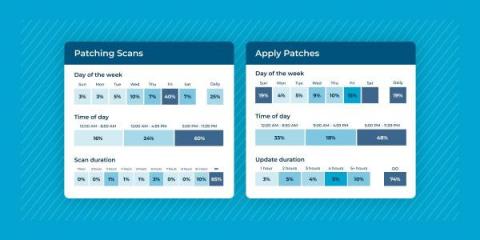
As we move into the new year, organizations can expect the number of cyberattacks to increase significantly. In order to battle these upcoming threats, effective patching and patch management processes will be essential. Before patching vulnerabilities, there are two main vulnerability assessments that IT teams should focus on: CVE & CVSS scores. Below, we’ll examine the importance of CVE & CVSS scores along with some of their uses and benefits in the cybersecurity space.