Operations | Monitoring | ITSM | DevOps | Cloud

Apache Arrow Basics: Coding with Apache Arrow Python

So by now, you are probably aware that InfluxData has been busy building the next generation of the InfluxDB storage engine. If you dig a little deeper, you will start to uncover some concepts that might be foreign to you: These open-source projects are some of the core building blocks that make up the new storage engine. For the most part, you won’t need to worry about what’s under the hood.

Perf8: Performance metrics for Python

One tool for all your Python performance tracking needs We're building this neat service in Python to ingest data in Elasticsearch from various sources (MySQL, Network Drive, AWS, etc.) for Enterprise Search. Sucking data from a third-party service to Elasticsearch is usually an I/O-bound activity. Your code sits on opened sockets and passes data from one end to the other. That's a great use case for an asynchronous application in Python, but it needs to be carefully crafted.

When to Use Flux vs Python

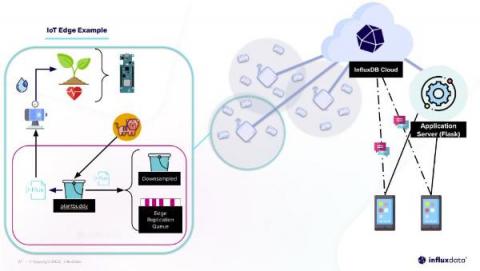
If you’re new to InfluxDB you might wonder, “Why does InfluxDB have its own query and scripting language (aka Flux)?” You might also be thinking, “InfluxDB has client libraries. Why and when should I use the Python client library and when should I use Flux?” In this post we’ll discuss when developers should use Flux and when they should use Python for developing their IoT applications.

Java vs Python: Code examples and comparison

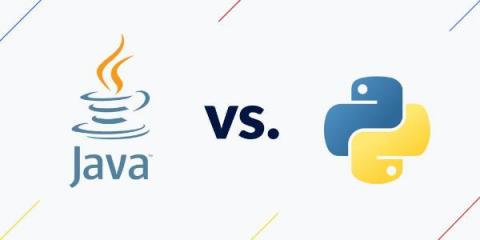
As two of the most popular and practical languages out there, should you choose Java or Python for your next project? Is one of these languages a clear-cut better option? The answer is a long one. According to GitHub’s annual Octoverse report, Python has now climbed to the second most popular language in usage, pushing Java down to third place.

What's in an instrumentation? An SQS and Python study

At Lumigo, we keep improving the coverage and quality of our distributed tracing instrumentation to give you, through Lumigo’s transactions, the most accurate and intuitive representation of how your distributed system behaves. In this blog, we cover a recent development for the Amazon SQS instrumentation in Lumigo’s OpenTelemetry distro for Python, providing a seamless experience for a scenario that otherwise would result in confusing, broken transactions and lost insights.

Solve code-level bottlenecks with Profiling for Python

Profiling is an important tool in every developer’s toolkit because it provides a granular view into the execution of your program from your production environment. This is an important concept, as performance bottlenecks can often be very hard or even impossible to reproduce locally due to external constraints or loads only seen in a production environment. Python is one of the most popular programming languages available, and it is one of the core technologies we use at Sentry.

How we run our Python tests in hundreds of environments really fast

Not in a reading mood? You also can watch the talk I gave at DjangoCon 2022. One of Sentries core company values is “for every developer”. We want to support every developer out there with our tools. But not every developer uses the newest or widely adopted tech stack, so we also try to support older versions of libraries and frameworks.

New Relic Alternative for Python

Python is one of the most used languages among developers. There are many reasons why python is very famous among developers, which we will discuss in this blog. Due to the fame of python, it is used in many business applications, hence monitoring a python application is crucial. New Relic is one of the oldest monitoring tools for python monitoring. But New Relic competitors are growing rapidly; hence, if you do not like the New Relic user interface, many New Relic alternatives exist.

TL;DR Python, Pandas Dataframes, and InfluxDB

InfluxDB has over a dozen client libraries so developers can get started more easily and program in the language they’re most comfortable with. One of our most popular options is the Python client library. InfluxDB supports not just Python but pandas, a tool popular with data scientists for analyzing and manipulating data. You can use the client library to output data from InfluxDB into a DataFrame format pandas can ingest, and you can write pandas DataFrames directly to InfluxDB.