Operations | Monitoring | ITSM | DevOps | Cloud

Java vs Python

Computer science is crucial to our lives today, and programming languages play a fundamental role. These languages act as a programmer’s toolbox. However, choosing a language can be challenging, especially when deciding between the two most popular options. These options include Java and Python. Java and Python are widely used as general-purpose programming languages for desktop and web applications. There are many similarities when comparing the two, but there are also significant differences.


Automating Flask deployments with PythonAnywhere

Now that development teams know about CI/CD, there is no reason for deployments to become a time-consuming and cumbersome process. CI/CD may start with continuous testing, but adding automated deployments takes your CI/CD practice to the next level. Continuous deployment slashes the time it takes to release so you can spend more time improving the quality of your applications.

Testing Python: Understanding Doctest and Unittest

Testing is crucial in the software development phase. It helps ensure easy debugging, agile code, and enhanced reusability. Performing tests that cover all use cases helps prevent a codebase from breaking — minimizing exposure to vulnerabilities. Python has two main testing frameworks that developers can use, doctest and unittest.

How to Unit Test with Python

Confidence in the quality, robustness, and reliability of a product are among the most valuable qualities sought after by consumers as well as businesses. This confidence is built through the rigorous testing of a product. In software engineering, practices like extreme programming (XP) and test-driven development (TDD) champion the belief that automated testing should be used from the start of a project.

Proper Python Instrumentation: 5 Things to Keep In Mind

Python’s USP as a programming language is that it’s flexible, easy to use, and quick to get started and iterate with. These virtues have led it to become the most popular programming language in 2022 and be used by millions of developers. As Python applications continue to multiply and scale to cater to millions of users worldwide, instrumentation and monitoring tools play a role more crucial than ever – in building robust, performant software.

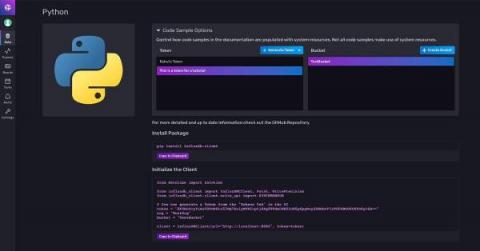
Start with Python and InfluxDB

Although time series data can be stored in a MySQL or PostgreSQL database, that’s not particularly efficient. If you want to store data that changes every minute (that’s more than half a million data points a year!) from potentially thousands of different sensors, servers, containers, or devices, you’re inevitably going to run into scalability issues. Querying or performing aggregation on this data also leads to performance issues when using relational databases.

A Look at the 6 Best Python Error Monitoring Tools in 2022

Errors are the necessary evils of software development. They bring to your attention critical information about what’s wrong with your application and what needs fixing before your end-users suffer. Error monitoring tools offer significant help in this cause by aggregating all the errors and issues your applications (and their end users) are struggling with under one roof and providing valuable insights to resolve these and optimize performance.

Continuous Performance Improvement of HTTP API

The following guest post addresses how to improve your services’s performance with Sentry and other application profilers for Python. Visit Specto.dev to learn more about application profiling and Sentry’s upcoming mobile application profiling offering. We’re making intentional investments in performance monitoring to make sure we give you all the context to help you solve what’s urgent faster.