Operations | Monitoring | ITSM | DevOps | Cloud

CFEngine 3.26 released - Admin

Today, we are pleased to announce the release of CFEngine 3.26.0! Being a non-LTS (not supported) release, this release allows users to test the new functionality we’ve been working on before it arrives in an LTS release later this year. The codename for this release is a bit different, as it is named after a new feature introduced, and what it eliminates - the admin user.

Package signing and verification

Disclaimer: This post focuses on Debian-based and Fedora\/RHEL-based distributions and packaging. Everybody using a GNU/Linux distribution most likely knows that packages used by the given distribution are somehow signed and such signatures are somehow verified. Usually, this knowledge comes with the first requirement to import some key when an extra package repository is being added to the system (the standard repositories of a distribution use keys that are present and trusted by default).

Business Process Automation, Explained

Business process automation no longer sits on the sidelines. What was once an emerging technology is now the engine behind modern business operations. In fact, around 60% of companies already use automation tools in their workflows, according to Duke University. This is not just companies — developers are also contributing to this shift by adopting low-code, no-code, and digital process automation platforms. These new tools remove barriers that once slowed innovation.

Securing the Software Supply Chain: Why It's More Important than Ever

The software supply chain has become the backbone of modern IT environments. It powers applications, underpins operational processes, and drives innovation within organizations across industries. Securing the software supply chain has moved from a peripheral concern to a central element of cybersecurity: The vast network of code, dependencies, integrations, and third-party tools that comprise the supply chain is increasingly under siege from cyber threats and at risk of exploitation.

Are You Getting the Full Value from Your Automation Strategy? Here's How to Find Out

Take our maturity quiz today and see where your automation maturity stacks up! Let’s call a spade a spade: Automation isn’t just a “nice to have” anymore. Automation is business-critical for speed, scalability, and resilience. It’s a mechanism of survival in today’s hyper-modern state of business. But the reality is that not every team is on the same page when it comes to automation.

RITA Demo

Watch a demo of RITA, the first AI Agent powered by Resolve Actions. RITA brings smart, real-time assistance to IT ticket handling, where delays often occur. From auto-populating ticket fields and translating user inputs to generating new knowledge articles, RITA enhances the efficiency and accuracy of every support interaction.+ Increases first call resolution rates+ Scales your service desk capacity while retaining quality.

Why Patching is Important: The Risks of Ignoring It & How to Stay Ahead of Patch Management This Year

Let's face it: no one likes patching. For some IT ops teams, it's such a burden that it's easy to forget why patching is important. Lots of teams put off patching until it's deemed absolutely necessary, like a vital app update or a piece of critical software going EOL. We all know ignoring patches, or letting them pile up, is a bad practice. Read this blog to remind yourself why patching is crucial, what can happen if you don't patch, and how to stop putting it off.

AI SOC, Explained: How AI-Powered SOCs Transform SecOps

Security Operations Centers (SOCs) are the command center of an organization’s frontline cybersecurity defenses — responsible for monitoring threats, prioritizing alerts, and orchestrating remediation. However, today’s SOCs are facing an existential crisis: an overwhelming volume of increasingly complex and sophisticated threats combined with a shortage of skilled analysts.

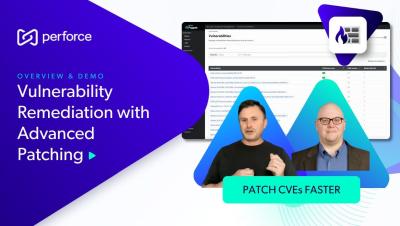
Vulnerability Remediation: Automate VR Workflows with Puppet

Secure and resilient infrastructure is non-negotiable. Puppet Enterprise Advanced automates critical tasks like patching, configuration management, and compliance, strengthening your security posture and bridging the gap between security and operations. Deploy essential updates quickly, minimizing threats and maximizing efficiency.