Operations | Monitoring | ITSM | DevOps | Cloud

The latest News and Information on APIs, Mobile, AI, Machine Learning, IoT, Open Source and more!

Sponsored Post

From Dashboards to Conversational AI: The Evolution of UI in IT Products

The way IT teams interact with technology has changed dramatically over the years. From early text-based interfaces to today's dashboards and now conversational AI, each stage has reshaped how we monitor, diagnose, and understand complex IT environments. But while dashboards gave us visibility, they often led to more questions than answers. In this post, we briefly explore the evolution of UI in IT products and how conversational AI is bridging the gap between data and understanding.

What happens to software when agents never stop coding?

Before AI, developers pushed code a few times a day. Now agents are pushing it thirty times, and they’re not stopping. Aditya Jayaprakash (JP), the founder who hit a million in ARR with four people in under two years, joins our CEO, Michael Reid to break down what software looks like when agents never stop coding, why pipelines now run dozens of times a day, and how his platform absorbs customer bursts the hyperscalers can’t.

Why Observability Isn't Enough for AI Coding Agents

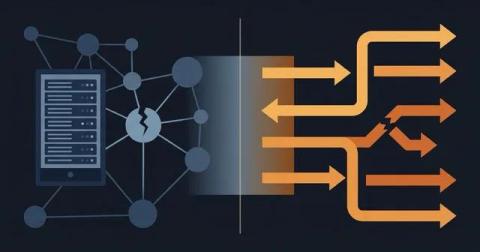
Observability platforms collect pre-instrumented logs, metrics, and distributed traces to monitor production systems and surface failures to human engineers. The adoption of AI into engineering has led observability providers to offer those same signals to agents. This is often packaged as AI observability, but the signals themselves were designed around a human investigation loop. AI coding agents work faster, consume data differently, and need feedback as they work rather than after deployment.

Instrumenting AI Agents for the Agent Timeline: A Practical OpenTelemetry Guide

AI agents are nondeterministic, multi-step, and opaque. When one fails in production, "the model said something weird" is the cheapest, most useless line in your incident postmortem. To debug agents the way they actually run, you need telemetry that captures all of it, in order, with enough context to reconstruct what happened. The OpenTelemetry GenAI Semantic Conventions give you a vendor-neutral way to do exactly that.

Your AI isn't underperforming. Your data foundation is.

New research reveals why Australian businesses are entering the new financial year with bigger AI budgets and the same unsolved problem. One in three Australian businesses exceeded their AI budget last year. Yet, half of them plan to increase AI spending again this year. Yet the behaviour that caused those budget overruns remains largely unaddressed.

How Agentic AI Enables Autonomous Threat Response at Machine Speed

Why do 40% of alerts received by security teams today go completely uninvestigated? It’s not due to a lack of concern but instead caused by shortening attack windows and compounded by overwhelming tech sprawl. Today’s security teams are operating in a threat landscape defined by escalating attacks, tighter budgets and mounting alert fatigue. Organizations process an average of 960 security alerts per day, and large enterprises handle more than 3,000 daily alerts across roughly 30 tools.

What if AI could resolve your IT tickets before they're ever created?

Watch how agentic AI automates password resets, VPN troubleshooting, access requests, software installations, and other repetitive IT service desk tasks without human intervention. Resolve helps enterprises reduce ticket volume, lower ITSM costs, improve employee experience, and move toward Zero Ticket IT. If you're researching AI for IT support, ServiceNow automation, ITSM automation, autonomous IT operations, or AI service desk solutions, this Short shows what's possible.