What's New Pandora FMS 763 RRR
Let’s check out together the new features and improvements included in the newest Pandora FMS release: Pandora FMS 763.


Let’s check out together the new features and improvements included in the newest Pandora FMS release: Pandora FMS 763.
Monitoring performance in front-end applications is vital. It focuses on the areas of the application users experience. These areas are slow rendering or frame rate, network request errors, and unresponsive user experience. Your application’s users expect the experience of using the application to be fast, responsive, and smooth. In the first article of this series, we discussed some tips for optimizing your React Native application performance.
In a world where the customer’s digital experience is critical to business outcomes, it is crucial to understand how our applications are behaving. As businesses increasingly rely on the performance and availability of revenue-generating applications, the tolerance for downtime and slow response times has plummeted – so the response to production issues must be quick and effective.
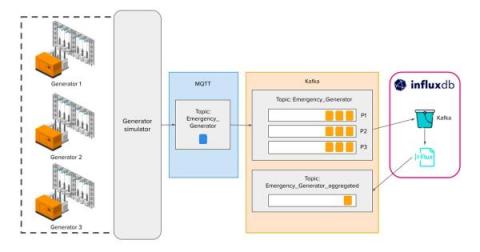
So here we are…the final chapter. In Part 2 of this series, we started to drill down into some of the concepts that make Kafka great. We concluded that although terminology between MQTT and Kafka was similar (for example topics), they behaved quite differently under the hood. We also took a brief overview of Kafka Connect and how we can use some of the enterprise connectors to stream our data to other platforms. Yet we did learn that Kafka does have some shortfalls.
Morph is a new database migration tool designed to improve Mattermost schema migrations. It can be used programmatically with a library and from a CLI. Morph stores the schema version in a table, where all applied migrations are persisted. It’s a flexible open source library that can be used with a driver interface implementation and a source to read migration scripts from. The engine uses a dependency injection pattern so that any implementation can be used with the library.
Frontend monitoring is a process of tracking and maintaining the health of an application’s client-side. It involves monitoring the availability, functionality, and performance of the client-side of an application. We can segment a web application into two parts. I.e., client-side and server-side.
Note 8.3.0 has an issue that could cause creating and accessing snapshots against Azure snapshot repositories to fail authenticating when using SAS tokens. This impacts self-managed customers who have deployed 8.3.0. Elastic Cloud Azure deployments are not currently being upgraded to 8.3.0 and are not impacted as a result. Visibility is crucial for ensuring application performance but it can be difficult to efficiently scale monitoring across all your critical infrastructures, platforms, and services.
8.3.0 has an issue that could cause creating and accessing snapshots against Azure snapshot repositories to fail authenticating when using SAS tokens. This impacts self-managed customers who have deployed 8.3.0. Elastic Cloud Azure deployments are not currently being upgraded to 8.3.0 and are not impacted as a result. The latest release of Elastic Enterprise Search brings to market enhancements to getting data into Elastic Enterprise Search.
If there’s one essential thing we’ve learned from being in the business of digital operations for more than 13 years, it’s that every business has a unique approach to building resilience with its bespoke tech stacks and processes. Many PagerDuty customers around the world are starting to provide direct access to their on-call teams with Live Call Routing (LCR).
We are proud to announce that we have won the 2022 Microsoft OSS on Azure Partner of the Year award! The Microsoft Partner of the Year Awards recognize Microsoft partners that have developed and delivered outstanding Microsoft-based applications, services, and devices during the past year. Awards were classified in various categories, with honorees chosen from a set of more than 3,900 submitted nominations from more than 100 countries worldwide.