Log4j: Two Tricks to Make Your Next Vulnerability Less Chaotic
Tl;dr: Log4j is a mess, if you’re chasing down the applications, services and servers that use Java; consider the suggestions below to make zero day patching easier.


Tl;dr: Log4j is a mess, if you’re chasing down the applications, services and servers that use Java; consider the suggestions below to make zero day patching easier.
Our technology-empowered world continues to evolve at rapid pace, and so do the expectations of customers. The brands that will succeed tomorrow and in the future will be those that keep up with that change. While the vast majority of companies have transformation initiatives, in my digital transformation consulting work, I have noticed four common misconceptions about digital transformation that have the potential to derail even the most well funded efforts.
Enterprise Service Management (ESM) has time and again proven that many of ITSM’s best practices have applicability beyond IT. The global pandemic and the corporate need for digital workflow enablements have accelerated the growth of companies adopting ESM in 2021. Wider adoption of the technology continues to be imminent as organizations pursue to extend the core IT service desk practices to other lines of business.
Revenue and consumer confidence are at stake this holiday season for brands worldwide. Shoppers are on the prowl for deals, and their predator instincts hunt for bargains in milliseconds. Google cites convenience, price, and availability as the top three reasons why consumers choose to shop online. Today’s online shopping has built an expectation for ease of use, and consumers have evolved into apex shoppers.
Introduction As all companies become software driven, DevOps is becoming an important practice in enterprises and startups across the world. DevOps is about bringing velocity to delivering tech products and services, so you can delight customers and meet business goals. To achieve this velocity, development (dev) and operations (ops) teams work closely together across the software lifecycle - from planning to release. And this has led to a new role in engineering teams - DevOps Engineer.
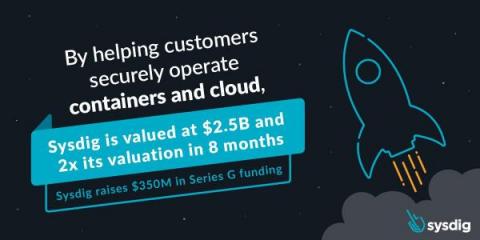
I am excited to announce today that we have raised an additional $350M at a valuation of $2.5B, more than doubling our valuation and bringing our cumulative funding since inception to ~$750M. This funding reflects investor conviction in our ability to be the dominant cloud and container security platform, and brings us closer to our vision of helping every organization to confidently run modern, cloud-native applications.