Modern businesses rely on dozens of third-party services to operate effectively. When AWS goes down, your application might crash. When Stripe has issues, payments fail. When Slack experiences an outage, team communication grinds to a halt. Vendor monitoring platforms help you track the health of these critical dependencies before they impact your operations. But with numerous options available, selecting the right platform requires careful evaluation of your team's specific needs and workflows.
If you're pouring your heart into making Reels, Stories, or IGTV videos, you're probably sneaking peeks at that view count. It's like checking your phone for likes after a big party post. In 2025, Instagram views are your front-row ticket to knowing how your content's doing-they show you exactly how many folks are watching your stuff. They're not just numbers; they're like a report card telling you what's hitting home with your crowd.
Security breaches rarely begin with a hidden zero-day exploit or a complex web of escalated hacks. They often start in very simple ways – an internal team member is breached, a permission is misconfigured, an overly permissive API endpoint is overlooked, or a JWT simply doesn’t expire. An API, or application programming interface, is a set of protocols and tools that enable different software systems to communicate and exchange data, making them essential in modern software development.
In the last decade or so, network infrastructure has undergone a massive transformation. With the rise of hybrid cloud, distributed applications, and software-defined everything, managing networks has become exponentially more complex. What used to be a stable, predictable environment is now a constantly evolving system of interconnected services, protocols, and devices, each with its own telemetry, APIs, and failure models.
If you’ve ever spent hours chasing a weird issue in your Kubernetes cluster, you’re in good company. Reddit’s r/kubernetes is full of hilarious and painful stories about clusters going off the rails for reasons no monitoring dashboard ever predicted. And while it’s easy to laugh after the fact, each of these moments highlights just how important observability is because these kinds of problems don’t show up on your radar until it’s too late.
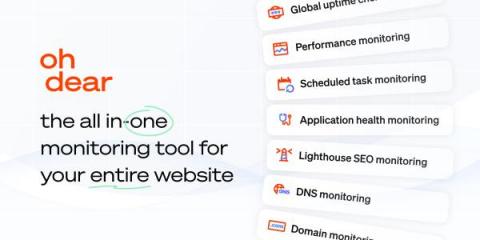
A critical security vulnerability was recently discovered in Livewire v3 that allows remote code execution, as Stephen Rees-Carter reported on Securing Laravel. While patches are released quickly, many applications remain vulnerable because developers simply don't know about the issue yet. Oh Dear's Application Health monitoring solves this by continuously checking your production environment for security vulnerabilities and immediately notifying you when issues are detected.
TL;DR: Timely email delivery is critical. Delays in transactional or marketing emails can result in missed opportunities and reduced customer trust. Utilize monitoring methods such as timestamp analysis and round-trip tracking to ensure emails reach inboxes within seconds.
At incident.io, we are building a product that our users rely on 24/7, all year round. This means it is crucial that it is always working, and that is where our on-call rotation comes in. We believe that everyone should be on-call because it tightens the feedback loop between shipping new features and maintaining what we have, leading to more pragmatic engineering decisions.