Operations | Monitoring | ITSM | DevOps | Cloud

Welcome to the Now Platform Utah release!

We’re at a unique moment in business history. Organizations face mounting pressure to streamline their processes and improve productivity and performance, often with tighter budgets and fewer resources. Business leaders must drive uninterrupted innovation and enable their teams to do great work—despite economic uncertainty. My team and I are passionate about developing innovative solutions to customers’ pressing needs.
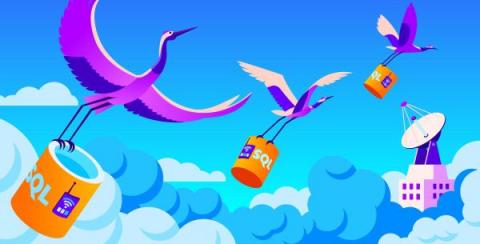
Strategize your Azure migration for SQL workloads with Datadog

Migrating an on-prem database to a public cloud comes with a number of benefits, such as no longer needing to manage and maintain physical infrastructure, dynamic scaling, disaster recovery, and overall cost reduction. However, migrating to the cloud can often be a complex and daunting task. For instance, if an organization is a Microsoft shop with teams that rely on SQL Server databases, Azure is a natural fit for its needs.

6 Customer Experience Enhancement Tools to Look Out for in 2023

Given the endless choices customers today have, offering excellent customer service is the only way to stay relevant in a cut-throat CX landscape. 73% of customers say that customer experience is a determining factor when making purchases, while 42% are ready to pay more in exchange for superior customer service. However, delivering instant and personalized customer experiences at scale across channels is a challenging feat today.

Ask Miss O11y: Is There a Beginner's Guide On How to Add Observability to Your Applications?

I want to make my microservices more observable. Currently, I only have logs. I’ll add metrics soon, but I’m not really sure if there is a set path you follow. Is there a beginner's guide to observability of some sort, or best practice, like you have to have x kinds of metrics? I just want to know what all possibilities are out there. I am very new to this space.

Our Top 3 Uptime Monitoring Tools and Softwares

Whether you run a website of your own, or rely on a specific website for your profession, finding out a URL has gone down can cause considerable losses in revenue and accessibility, or deny access to the critical information you or your users rely on. Uptime monitors let you constantly check your site(s) to see if they are up and running. There are a few common use cases for uptime monitoring.

Five Things to Know About Google Cloud Operations Suite and BindPlane

Google Cloud Operations is a powerful integrated monitoring, logging, and trace managed service for applications and systems running on Google Cloud and beyond. As part of our partnership with Google, we help extend Cloud Operations with BindPlane OP and OpenTelemetry monitoring for a complete monitoring solution. With BindPlane OP, Google Cloud Operations becomes a single pane of glass for monitoring all aspects of your data center, no matter if it’s on prem or running in the cloud.

Is Managed Prometheus Right For You?

Prometheus is the de facto open-source solution for collecting and monitoring metrics data. Its straightforward architecture, operational reliability, minimal upfront cost, and versatility in integrating with cloud-native systems make it the preferred choice for many. Getting started is as simple as configuring the Prometheus server and setting simple parameters such as the scrape intervals and targets, cadence, and setting the job name based on the function of the server.

Predictive Maintenance for Industrial IoT Devices at the Edge

In industrial operations, time is money. The more efficient processes and machinery are, the better it is for business. Providing proactive monitoring and maintenance of industrial machines, however, is not an easy task. This is especially true as these machines become increasingly complex and distributed. It’s not possible to have maintenance crews on site for every asset in a distributed system. The edge is where the physical world meets the digital world.

Monitoring Kubernetes Object Configuration with LogicMonitor

Kubernetes has emerged as the de facto standard for container orchestration in modern software development, allowing organizations to manage and scale containerized applications easily. As a highly dynamic and distributed system, however, Kubernetes can be challenging to manage and maintain at scale. One of the most critical aspects of maintaining a stable and secure Kubernetes cluster is monitoring the object configurations and tracking the changes over a period of time.