At PagerDuty, our purpose is to empower teams with the time and efficiency to build the future. That means that our own teams are constantly building and relentlessly innovating to help organizations drive transformative change in the way they operate.
In the modern web-app space, there’s been a trend going around that I like to describe as “getting back to basics”. It seems as though over the years, the tooling and complexity around building web-apps has gotten more and more complex. In that time, we’ve strayed further from browser primitives into highly abstracted and javascript-heavy solutions to solve problems our browsers solved back in the 90’s.
Navigating the realm of Windows observability often referred to as O11y (short for observability), can be a complicated journey. Windows environments are known for their complexity, with various services, applications, and workloads running on each host.
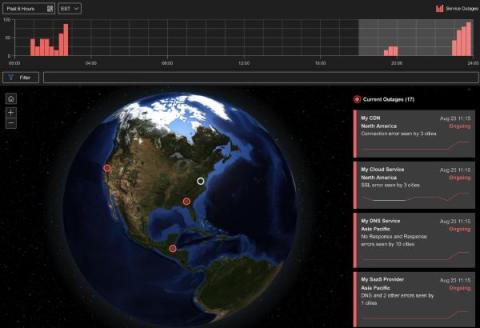
When outages cost you tens of thousands of dollars each minute, pinpointing the source of disruptions as quickly as possible becomes mission-critical. This is not a time for finger-pointing and hastily assembled war rooms searching for that needle in the haystack. You need simple, intelligent, trustworthy Internet health information to expedite your incident detection.
It's one of the most dreaded words among Kubernetes users. Regardless of your software engineering skill or seniority level, chances are you've seen it at least once. There are a quarter of a million articles on the subject, and countless developer hours have been spent troubleshooting and fixing it. We're talking, of course, about CrashLoopBackOff.
In recent months, we’ve talked a lot about how AppNeta by Broadcom offers active monitoring capabilities, and how they enable teams to rapidly troubleshoot issues across both internally managed networks and those managed by third parties, such as ISPs and cloud providers.
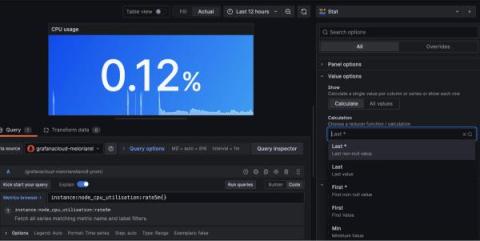
Grafana is an open source visualization and monitoring solution for correlating and analyzing data from various sources. From time series graphs to heatmaps to 3D charts, it gives you lots of ways to untangle complex datasets. And while that’s incredibly powerful for observability, sometimes you’re looking for something fairly straightforward.
Organizations are moving to micro-services and container-based architectures because these modern environments enable speed, efficiency, availability, and the power to innovate and scale more quickly. However, when it comes to troubleshooting distributed cloud native applications, teams face a unique set of challenges due to the dynamic and decentralized nature of these systems.