Operations | Monitoring | ITSM | DevOps | Cloud

A Simplified Guide to Implementing Full-Stack Observability

After the craziness of the last few years, who can blame IT, DevOps, and operations teams for wanting more stability in their personal lives and jobs? Yet the message from the top isn’t in line with this: Gartner reports over 94% of CEOs aim to accelerate pandemic-era digital transformation and are investing 5.1% more into IT budgets. This means threading a delicate balance between stability and scalability.

Backfill Missing Time Series With SQL

Time series data streams are often noisy and irregular. But it doesn’t matter if the cause of the irregularity is a network error, jittery sensor, or power outage – advanced analytical tools, machine learning, and artificial intelligence models require their data inputs to include data sets with fixed time intervals. This makes the process of filling in all missing rows and values a necessary part of the data cleaning and basic analysis process.

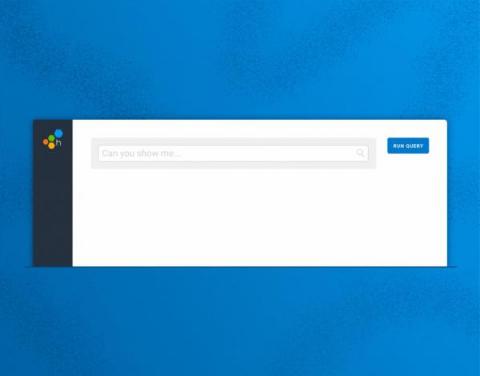
Observability, Meet Natural Language Querying with Query Assistant

Engineers know best. No machine or tool will ever match the context and capacity that engineers have to make judgment calls about what a system should or shouldn’t do. We built Honeycomb to augment human intuition, not replace it. However, translating that intuition has proven challenging. A common pitfall in many observability tools is mandating use of a query language, which seems to result in a dynamic where only a small percentage of power users in an organization know how to use it.

Big data security foundations in five steps

We’ve all read the headlines about spectacular data breaches and other security incidents, and the impact that they have had on the victim organisations. From LastPass to SolarWinds, “data security” seems to be the phrase on the lips of every CTO these days. And in some ways there’s no place more vulnerable to attack than a big data environment like a data lake.

Upgrading Your Rancher Downstream Clusters to Kubernetes v1.25

The PodSecurityPolicy API, initially deprecated in Kubernetes v1.21, was entirely removed in Kubernetes v1.25. Because the API was removed, you cannot create, edit or query PodSecurityPolicy resources in a Kubernetes v1.25 cluster. Also, because its admission controller was removed, your clusters can no longer enforce any PodSecurityPolicy rules that were created in Kubernetes v1.24 and prior.

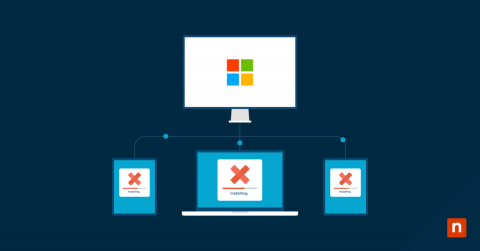
SCCM Patch Management: Deployment Guide

When comparing operating systems, it’s clear that Microsoft Windows currently comes out on top. As a matter of fact, “Microsoft Windows was the dominant desktop operating system (OS) worldwide as of January 2023, with a share of just over 74 percent.” Microsoft has many tools and features that are widely-used by the IT community, such as SCCM. This SCCM patch management deployment guide lays out the essential steps to take for deploying updates in the tool.

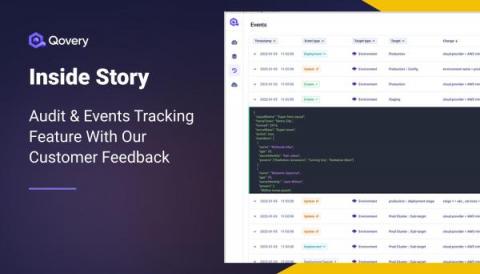
Inside Story: Audit & Events Tracking Feature With Our Customer Feedback

At Qovery, we are dedicated to providing the best experience possible to our users when it comes to managing their cloud infrastructure. We believe that building features with our customers is essential to our success. That's why we worked closely with our customers to develop our new feature, Audit & Events Tracking.

The Future of Website Development: Exploring the Impact of Artificial Intelligence and Machine Learning

Artificial intelligence (AI) and machine learning (ML) are two cutting-edge technologies that are revolutionizing the field of website development. AI refers to the ability of computers to perform tasks that typically require human intelligence, such as recognizing speech, understanding natural language, and making decisions based on data. On the other hand, ML is a subset of AI that involves training algorithms to learn from data and make predictions or decisions based on that learning.