Operations | Monitoring | ITSM | DevOps | Cloud

The latest News and Information on Log Management, Log Analytics and related technologies.

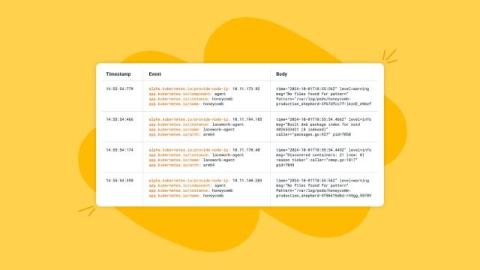
Docker Log Rotation - Definition, Configuration Guide, and Best Practices

Docker containers generate logs to monitor their operations, but without a mechanism in place to manage these logs, they can grow indefinitely, leading to excessive disk space consumption and performance degradation. Implementing docker log rotation is crucial to control log file size and quantity, ensuring efficient log management and optimal system performance.

Log Miner

Learn how Selector’s Log Analytics simplifies log management by enabling direct ingestion from various sources, including network, infrastructure, cloud, and applications. With real-time analysis, it filters and clusters log data, detects anomalies, and surfaces actionable insights automatically. Explore how users can select specific time periods, search and filter logs easily with intuitive controls. Using Named Entity Recognition (NER), Selector extracts key metadata from logs for searching and correlation with other telemetry.
Sponsored Post

From Legacy to Future-proof: Transforming Your Enterprise Data Architecture

Enterprise data and analytics is a fast-evolving field in enterprise IT, where new technologies and solutions are creating revolutionary ways to extract insights from data. To keep pace with these changes and drive value creation through data analytics initiatives, organizations must be willing to adopt innovative solutions, embrace new and emerging best practices, and move beyond obsolete or outdated methods that are no longer effective. Our blog post this week is all about transforming your enterprise data architecture to elevate your data management and analytics capabilities.

AI-Powered Observability: Picking Up Where AIOps Failed

GenAI promises evolutionary changes in how we use observability tools, but meeting expectations means heeding the lessons of our AIOps mistakes. The emergence of generative AI in observability tools was inevitable, but there’s already been an extreme degree of hype in the market. Monitoring, DevOps and ITOps have never been immune to trends, and with GenAI capabilities, the propagandahype machine is running out of control.

4 benefits of observability

Achieving modern observability with a unified data platform and Search AI If you have a love-hate relationship with your data, we don’t blame you. It’s generated at high velocity and from all sides — your apps, endpoints, networks, and servers. By 2025, global data creation is projected to grow by more than 180 zettabytes.* Inside this wealth of data lies better operational resilience, profitability, and innovation.

How to Integrate Rust with Logit.io

Rust has claimed the title of ‘most desired programming language’ for the past 8 years in a row in StackOverflow’s annual developer survey. The language was created less than 20 years ago, yet when users work with Rust, they always seem to want to work with it again. This consistent growth in popularity has, in part, driven the need for effective monitoring practices, particularly Rust tracing.

How to Integrate OpenTelemetry with Logit.io

When telemetry data (collected from system sources in observability) is analyzed collectively it provides insights into the relationships and dependencies within a distributed system. OpenTelemetry standardizes the collection and transmission of telemetry data to backend platforms, closing visibility gaps by offering a unified instrumentation format across all services.

5 Ways to Approach Data Analytics Optimization for Your Data Lake

While data lakes make it easy to store and analyze a wide variety of data types, they can become data swamps without the proper documentation and governance. Until you solve the biggest data lake challenges — tackling exponential big data growth, costs, and management complexity — efficient and reliable data analytics will remain out of reach.