The latest News and Information on Monitoring for Websites, Applications, APIs, Infrastructure, and other technologies.
Most modern companies that offer web or mobile apps use APM at some stage to enhance their growth. APMs help you to understand what's going on inside your app. It helps you know when something breaks, and it also helps you learn how to make sure it doesn't happen again. However, choosing the right APM solution for your product is complex. If you select the incorrect tool, you may discard it because it will not enable you to meet your observability objectives.
The Go standard library has fantastic support for making HTTP requests. However, sometimes, a request needs to be modified or an action needs to be taken upon response (eg. logging a response). In many cases, adding these logs to the every request would involve a lot of duplicate code. In other cases accessing the client might not be possible because of restricted access in a different package or third party library. Thus, I introduce RoundTrippers.
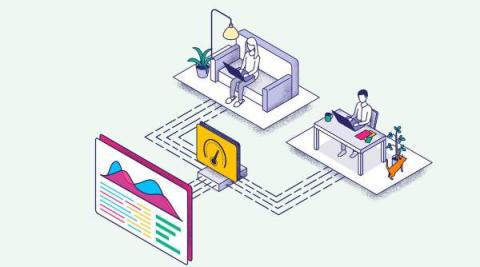
Monitoring IT infrastructure and services has always been an essential IT prerequisite. However, your IT monitoring system and security measures need to upgrade with an exponential increase in the number of remote users post-pandemic. For instance, consider this: At the end of a work day, you are notified that one of your critical services has gone down. But the problem is that five teams support different processes of that service.
The Microsoft Call Quality Dashboard (CQD) does a solid job of helping admins check call and meeting quality across their Teams setup. But wouldn’t it be handy if you could get more out of CQD and make optimizing Teams for your business easier? Here are 3 ways to do just that. Although Microsoft provides the core quality data for you to accurately monitor Teams performance, there are other things you can do to augment your call quality dashboard.
At Honeycomb, the datastore and query systems that we manage are sociotechnical in nature, meaning the move to observability requires a sociological shift as much as it does a technical one. We've covered the technical part in several prior discussions for our Authors’ Cut series, but the social aspect is a little squishier. Namely: How do you solve the people and culture problems that are necessary in making the shift to adopt observability practices?