Operations | Monitoring | ITSM | DevOps | Cloud

The latest News and Information on Observabilty for complex systems and related technologies.

You Don't Need Three Pillars, You Need Single Threads

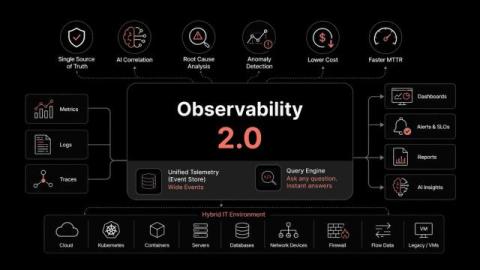
Last week was a great reminder for me about the challenges of the traditional model of observability defined by the “three pillars” of metrics, logs, and traces. One of the customers I’m currently working with is a large financial institution that has a robust three pillar implementation. Every critical application ships their telemetry to either or both their cloud-native tool and a central tool.

Building a Unified Enterprise Observability Strategy Webinar

Join Graham Davies, Technical Product Manager at SquaredUp as he provides a practical guide to breaking down data silos between IT, operations and the business. In this session, Graham digs into why dashboard and tool sprawl is making decisions harder, not easier, and shows you a practical framework for building a single source of truth your whole organisation can rely on.

The End of Manual Instrumentation: Scaling Observability with OTel OBI & Coralogix

Traditionally, achieving deep visibility into distributed systems required significant trade-offs in engineering time. Collecting meaningful application metrics and traces required teams to embed language-specific agents, modify source code, or manage complex library dependencies across every service.

What Is an AI SRE? And Why Do They Need Live Runtime Evidence?

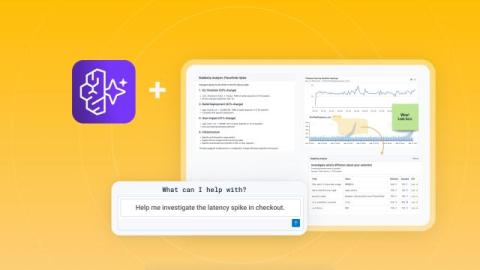
AI SREs are autonomous systems that handle incident triage, root cause analysis, and remediation by correlating logs, metrics, traces, and code signals. However, as they rely on pre-configured telemetry, the critical execution details of a specific failure, such as variable state and code paths, can often be missed. As a result, they either force users into manual redeploy loops or make inferences from partial data, diagnosing issues using probability rather than proof.

Fewer Tools, Faster Fixes: A Practical Guide to Observability Consolidation

Most observability stacks aren’t designed, they accumulate. A logging tool here, a tracing platform there, and before you know it you’re managing rising costs and a setup that ultimately slows down your team. And you’ve moved further away from actually solving problems for your users.

ICYMI: Is This Code Worth Running? Here's How to Know

Over the last three months, we’ve been exploring what about software development and observability changes with AI, and what doesn’t. Our conclusion: these five principles will still remain true, even when 90% of the code is AI-driven. The agentic AI space is moving fast. Models are improving, context windows are expanding, and the ways people build and operate agents are changing so fast that any thoughts we share could feel dated by the time you read this.

Optimizing the OpenTelemetry Python SDK for LLM Workloads

Agentic workloads thrive with precision tooling. Just like developers, they need the rich context, high cardinality, and fast feedback loops that allow them to ask exploratory open-ended questions of their code. But instrumentation is costly, and from the dawn of software, developers have tried to do the most possible with the least amount of resources.

Top 6 AI SRE Tools and Why Runtime-Grounded Reliability Is the New Standard

AI SRE tools accelerate incident detection, root cause analysis, and remediation across distributed production systems. They ingest telemetry signals, including logs, metrics, traces, alerts, and deployment history, to correlate anomalies, narrow fault domains, and reduce manual triage. This guide breaks down the top AI SRE tools in 2026 and helps you choose the right one based on your team’s biggest bottleneck, whether that is faster triage, deeper root cause analysis, or runtime-level validation.

Beyond the Dashboard: Selector's Patented Approach to Conversational Observability

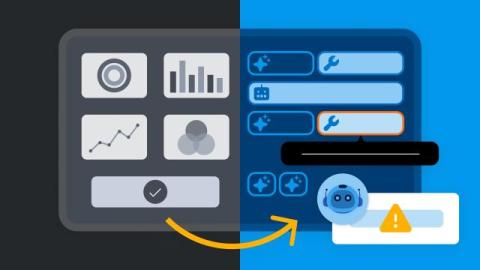
For years, IT operations teams have been trapped in a frustrating paradox: the data they need to solve critical issues is right at their fingertips, yet entirely out of reach. Accessing it requires engineers to master complex, platform-specific query languages, dig through endless layers of dashboards, and hunt for the exact visualization that holds the answer. Under the intense pressures of modern speed, scale, and complexity, this rigid model is breaking down.