Operations | Monitoring | ITSM | DevOps | Cloud

The latest News and Information on Observabilty for complex systems and related technologies.

Code Agents Need Observability

For those of us using tools like Claude Code, Codex, or Gemini, we already know they’re powerful. They can write code, refactor functions, open PRs, even run commands. For a lot of developers, they’re already part of the daily workflow. But once you zoom out beyond the individual developer, the biggest problem isn’t productivity. It’s control. AI coding tools are powerful, but they introduce a new, unpredictable cost layer that most teams don’t fully understand.

Managing OpenTelemetry Semantic Convention Migrations With the Collector

Real production data tells the story better than I can. Juraci Paixão Kröhling, a friend and fellow observability practitioner at OllyGarden, recently shared an example from an anonymized production environment: 1,830 occurrences of http.url and 23,984 occurrences of url.full in the same dataset. Both attributes describe the same thing. Both are actively being written to the same backend at the same time.

Beyond Uptime: Building a Self-Healing OpenClaw Observability Stack

The allure of OpenClaw is undeniable. You deploy a highly autonomous, self-hosted AI agent, give it access to your repositories and inboxes, and watch it reason through complex workflows while you sleep. It is the dream of the ultimate 10x developer tool realized. But as any veteran DevOps engineer will tell you: running an LLM-backed Node.js agent in production is vastly different from testing it on your local machine.

Observability Focus: Why It Became the Default Language of Modern IT Operations

Digital services run on fragile highways of microservices, containers, and event streams. Outages no longer hide inside a single server rack; they ripple across regions and ruin brand trust in minutes. Because uninterrupted insight now decides whether a launch soars or stalls, engineers treat observability as the vocabulary for every architectural choice, deployment ritual, and post-incident review. Similar discipline emerges in studios that refine professional end-to-end game dev workflows, where frame drops and lag spikes receive the same diagnostic rigor expected of banking APIs.

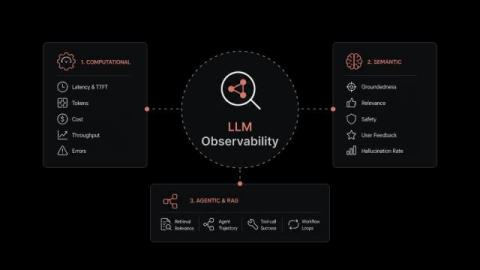
What Is LLM Observability? For CFOs And Engineers, The Missing Layer Is Cost

You probably have Datadog. Maybe New Relic, maybe Dynatrace. Your observability stack has been solid for years — and you're still flying blind on AI cost. Here's why LLM observability needs a fourth pillar most tools skip, and how to build one that actually tells you what your models are costing you per request, per feature, per customer.
Sponsored Post

From Microsoft SCOM to Dashboards

System Center Operations Manager (SCOM) remains one of the most capable on-premises monitoring platforms for Microsoft environments. However, as IT operations evolve toward real-time observability and self-service insights, traditional SCOM reporting and consoles can feel restrictive. This whitepaper explores practical ways to extend and modernize your SCOM visualizations using today's leading dashboarding technologies - including SquaredUp, Grafana, Power BI, and Azure Workbooks.

Moving Beyond SolarWinds: Building a Modern Observability Strategy

For years, platforms like SolarWinds have been a standard in IT environments. They helped teams answer a fundamental question: are systems up or down? That approach worked well when environments were more contained and predictable. The challenge is that most environments no longer operate that way. Hybrid infrastructure, cloud services, and tightly interconnected applications have changed what “visibility” needs to mean.

No more monkey-patching: Better observability with tracing channels

Almost every production application uses a number of different tools and libraries,whether that’s a library to communicate with a database, a cache, or frameworks like Nest.js or Nitro. To be able to observe what’s going on in production, application developers reach out for Application Performance Monitoring (APM) tools like Sentry. But there’s an inherent problem: the performance data that APM tools need is most often not coming natively from the libraries themselves.

AI Observability in Grafana Cloud: A complete solution for monitoring your agentic workloads

The observability industry has developed great tools for using metrics, logs, traces, and profiles to monitor the cloud native applications that have dominated the last decade of software development. But when it comes to understanding what an AI system is actually doing, we’re often left reading raw conversations, guessing at quality, and reacting too late. And that’s a problem.