The latest News and Information on Remote Work and related technologies.
Does it not strike you as strange that even after the world has coped with the COVID crisis, work from home did not end? We shall not examine the reasons behind the continuation of work-from-home culture. However, it is important to be cognizant of the fact that work-from-home is here to stay, and organizations need to adapt to it quickly. One of the major concerns for organizations today is onboarding new work-from-home employees.
Before the pandemic, capturing your users’ experience was simple because just about everyone was in the office, and you had traditional on-premises systems in place. Nowadays, remote work and hybrid access and usage patterns are much more varied. Work hours, 24×7 availability, collaboration, networking, hybrid, etc. all lead to difficulties in understanding employee Digital Experience.
The advantages of the hybrid & remote work model have been documented for some time now, and for many organizations the pandemic was the final push needed to start making the transition. Once these companies offered remote work for the first time, they had an opportunity to see firsthand how valuable it could be for their organizations. Who wouldn’t want to pay for less office space, and enjoy considerably lower operational overhead?
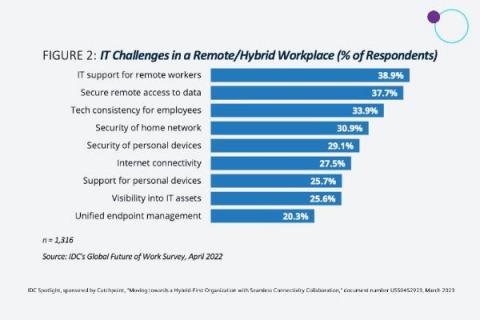
Challenges & Solutions Now that the world is reopening again from the pandemic, many employees are reluctant to go back to the office, preferring the convenience of work-from-home. To retain these employees, many organizations are adopting a compromise: hybrid work. In this setup, employees go to the office a few days a week, then report virtually from home for the rest.
Scottish essayist Thomas Carlyle may not have been thinking about remote working tools for software development teams when he wrote, “Man is a tool-using animal. Without tools, he is nothing; with tools, he is all”. However, the statement is apt in this age of the internet with hundreds of thousands now working from remote locations. The statement is especially true for team leaders charged with the herculean task of managing remote software development teams.