Operations | Monitoring | ITSM | DevOps | Cloud

The latest News and Information on Service Reliability Engineering and related technologies.

Sponsored Post

Outages ITOps professionals are thankful to avoid

As we settle into the time of year when we reflect on what we're thankful for, we tend to focus on important basics such as health, family and friends. But on a professional level, IT operations (ITOps) practitioners are thankful to avoid disastrous outages that can cause confusion, frustration, lost revenue and damaged reputations. The very last thing ITOps, network operations center (NOC) or site reliability engineering (SRE) teams want while eating their turkey and enjoying time with family is to get paged about an outage. These can be extremely costly - $12,913 per minute, in fact, and up to $1.5 million per hour for larger organizations.


Toil: Still Plaguing Engineering Teams

Our industry has always had localized expressions for work that was necessary but didn’t move the company forward. The SRE movement calls this type of work “toil.” The concept of toil is a unifying force because it provides an impartial framework for identifying — then containing — the work that takes up our time, blocks people from fulfilling their engineering potential, and doesn’t move the company forward.

Day in the life of an SRE

We spoke with two members from the SRE team, Alex Blyth and Zulhilmi Zainudin, to learn more about their role at Civo. Through this series, we aim to provide you with an overview of the different roles we have at Civo and what advice our team has. You can discover more about our team in our “day in the life of a Go Dev” and “day in the life of an Intern” blog.

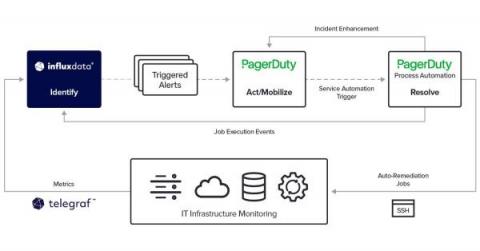
Reducing MTTR for DevOps and SREs with PagerDuty Process Automation and InfluxDB

Mean time to resolution (MTTR) is a metric that transcends industry and technology. It’s a measure of how quickly, on average, support teams identify, act, and resolve IT issues and incidents. Because MTTR directly relates to service quality, maintaining a low MTTR is a critical goal for DevOps and SRE teams. These teams have a vested interest in resolving issues quickly because escalating incidents to higher levels of the support team increases response and resolution times.

My Most Surprising Discoveries from The SRE Report 2023

I’ve had the honor and privilege of authoring The SRE Report for the last three years. For the 2023 version, this included working with some amazing individuals like Anna Jones, Kurt Andersen, and Steve McGhee. Download The SRE Report 2023 here (no registration required).

Empower the SREs - Conclusions from The SRE Report 2023

Let's be honest, nobody loves surveys. Ok, well I sure don't. But surveys satisfy a huge need in our demand for insights into complex human-computer, sociotechnical systems. It turns out that we've been measuring the computer part pretty well, but the humans – not as easy to keep track of. When Google SRE first defined toil as a metric we wanted to reduce, we spent far too long trying to quantify it numerically based on tooling and insights from computer systems.

Ask a Site Reliability Engineer (SRE)

Site reliability engineering (SRE) can be complicated, and at Datadog, we’ve spent a lot of time thinking about SRE and refining how we implement it. Join Datadog’s Brandon West and Rick Mangi as they provide a brief overview of SRE and its core concepts. This video also contains a Q&A session from the live taping of this panel.

Introducing a more complete logs forwarding experience

One of the key attributes of DevOps and SRE engineers is their ability to meticulously observe and monitor all of their applications. A task which can be achieved more efficiently by centralizing all generated logs to a central endpoint. By centralizing logging, engineers can, at any time, have an accurate overview of all events which take place across their applications, from just one place. Storing logs in an external system also allows companies to ensure compliance with many certifications.