Operations | Monitoring | ITSM | DevOps | Cloud

The latest News and Information on Service Reliability Engineering and related technologies.

ilert AI SRE is generally available

When you get paged at 3am, it takes about 30 seconds for the notification to reach you and maybe two minutes until you're in front of a laptop, awake enough to read. What you see then is usually a raw alert. A metric name, a threshold, a link to a dashboard. Then the ritual starts: open the dashboard, check what deployed in the last few hours, grep the logs for the first error, ask in Slack whether anyone touched the database. ‍ Most of that time is search.

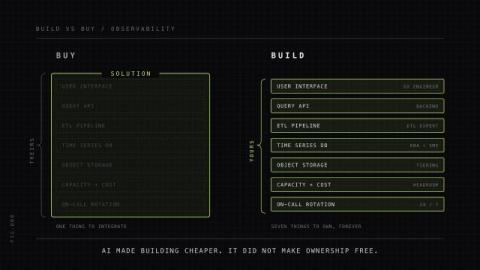
Why you should (not) build your own observability stack

If you are able to build it better than your vendor, then change your vendor. Not build it. Rishi builds large-scale observability systems at Last9, focusing on reliable and cost-efficient telemetry infrastructure, and writes about the practical lessons learned while operating ClickHouse, VictoriaMetrics, and OpenTelemetry in production.

Cloud Cost Management for Observability: A Practical Guide

Observability spend is outgrowing infrastructure budgets. What drives the cost up, how pricing models work, and a practical framework to manage it. Sejal Pandey works on content and growth at Last9, writing about observability, reliability, and SRE practices.

Your next internal developer platform is a library of agent skills

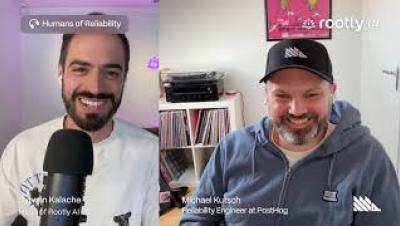
What happens when AI agents become direct users of your infrastructure? Michael Kutsch, Staff SRE and Team Lead for Cloud Foundations at PostHog, argues that the next internal developer platform may be a library of agent skills. Instead of forcing every task through a portal, his team is giving agents structured context, reusable workflows, and deterministic scripts they can call when reliability and governance matter.

Incident Response Automation: A Practical Playbook

A stage-by-stage playbook for automating incident response: what to automate at detection, triage, and remediation, what to deliberately leave manual, and a checklist to run against your current setup. Sejal Pandey works on content and growth at Last9, writing about observability, reliability, and SRE practices.

AI SRE Agent with Temporal, ClickHouse, and Codex: AURA in a Gated Run

1,133 requests failed on one bad commit. The patch and the regression test are already written by the time anyone is asked to read the exact diff. This demo runs AURA as one step inside a Temporal workflow, alongside Codex. A GET request against a product catalog service goes from success to HTTP 500, and ClickHouse records the version, commit, trace ID, and exact error for every request. By the time AURA investigates, all 1,133 requests on that version have failed.