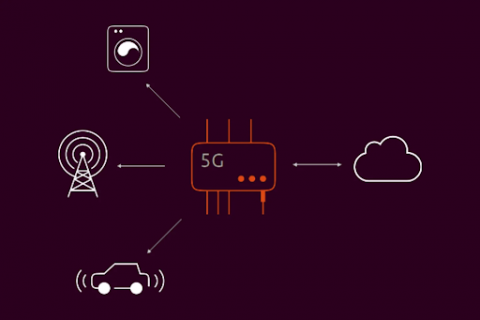
Tech innovators use Linux to create intelligent devices for homes, factories, buildings, cities or vehicles etc… These things are deployed at the edge, in privacy sensitive or business critical environments. They require ever more compute to run ever smarter applications. A Linux distribution engineered for embedded devices running highly intelligent applications at edge scale is overdue. Let’s discuss what it takes to get there.
This post marks the one year anniversary of the Ubuntu Robotics newsletter. We knew adding the year on the end of each title was a good idea! One full year where the Ubuntu Robotics team have been documenting their work, showcasing projects in ROS and discussing interesting things going on in the community. And my, what a year it has been. To mark the occasion, we’d love to hear and write about any work you’ve done in robotics or ROS over the last year.
Canonical is proud to announce the availability of OpenStack Charms 20.10. This new release introduces a range of exciting features and several improvements which enhance Charmed OpenStack.
Kubeflow, the ML toolkit on K8s, now fits on your desktop and edge devices! 🚀 Kubeflow provides the cloud-native interface between Kubernetes and data science tools: libraries, frameworks, pipelines, and notebooks. > Read more about what is Kubeflow To make Kubeflow the standard cloud-native tool for MLOps within the AI landscape, the open-source community has accomplished the aggregation and integration of many projects on top of Kubernetes.
According to leading independent researchers teknowlogy | PAC, open source platforms – and Kubernetes in particular – are central to the future of digital factories. The PAC RADAR report offers a detailed market analysis of industrial digitalisation trends, and it predicts that Kubernetes-based platforms that bring together edge and cloud technologies will soon dominate the digital factory landscape.
These days, the internal workings of Linux applications involve many different moving parts. Sometimes, it can be rather difficult to debug them when things go wrong or run slower than expected. Tracing an application’s execution is one way of understanding potential issues without diving into the source code. To this end, we wrote an app-tracing tool called etrace, designed to detect performance bottlenecks and runtime issues in snaps.
The experience of installing Ubuntu on Windows Subsystem for Linux (WSL) just keeps getting better. Beginning in Windows 10 Insiders Preview build 20246, released today by Microsoft, users can enable a complete WSL experience. This will enable WSL 2, download and install the latest WSL 2 Linux kernel, and then download and install the most recent Ubuntu LTS on WSL.
Canonical, the publisher of Ubuntu, releases Charmed Kubeflow, a set of charm operators to deliver the 20+ applications that make up the latest version of Kubeflow, for easy consumption anywhere, from workstations to on-prem, public cloud, and edge. > Visit Charmed-kubeflow.io to learn more. Kubeflow provides the cloud-native interface between Kubernetes, the industry standard for software delivery and operations at scale, and data science tools: libraries, frameworks, pipelines, and notebooks.