Operations | Monitoring | ITSM | DevOps | Cloud

Migrating Workloads and Performance Issues in Public Cloud

When on-premises capacity runs short, public cloud tends to be the first option infrastructure teams reach for. It is quick to provision, removes the hardware procurement problem, and sidesteps the question of what to do with an ageing estate. What it does not settle is whether migrated workloads will perform as the business requires once they are live in production, or whether the recovery design has kept pace with where services now sit.

Your Agents Need Infrastructure Too. Meet Qovery Blueprints.

AI agents are provisioning infrastructure now, not just writing code. Qovery Blueprints let you define what an agent, or a developer, is allowed to deploy and under what cost rules, so that self-service or delegation doesn't mean losing control. Alessandro leads product at Qovery. He drives the changelog, roadmap, and product strategy - turning customer feedback into platform capabilities.

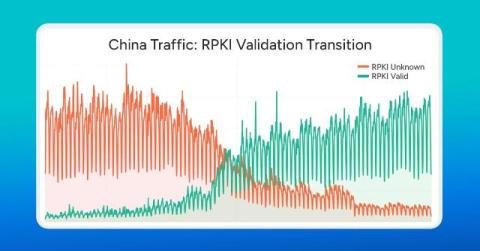
China Rolls out the ROAs

Long a laggard in RPKI adoption, China has dramatically increased its ROA coverage from 4% to 81% since April, signaling a major commitment to securing the internet’s routing system. This post explores the dramatic shift marking a significant milestone in global routing security, helping to protect networks from BGP routing mishaps that cause internet disruptions.

Multi-Datacenter Active ActiveMQ Deployment: Network of Brokers & AMQP

A single-datacenter ActiveMQ deployment, even with full HA, has a fundamental limitation: all message processing is bound to one physical location. Geographic distribution, whether driven by latency requirements (consumers closer to producers), regulatory requirements (data residency), or business continuity requirements (surviving a full site outage), requires a multi-data center deployment.

The art of SQL Server query tuning and execution plans (Hugo Kornelis) | The Simple Talk Podcast

Grant is joined by SQL Server veteran and long-time Microsoft MVP, Hugo Kornelis, to talk all things SQL Server query tuning, execution plans, and more. You’ll hear about some of the problems Hugo’s encountered during his consultancy career, what SQL Server has in common with a highway, and Hugo’s thoughts on AI – plus much more.

The secure path should be the default path - nothing more

Asking developers to take extra steps to pull securely is a policy that won't hold. The only approach that scales is making the private registry the default – a buffer between the developer and public registries that applies policy automatically at the global level. No extra steps, no security theater, no cognitive overhead at the point of pull. Automation and global policy configuration are what turn good intentions into a default secure posture.

Incident Review with Factory / Sentry

Learn how to user agents to turn Slack alerts into autonomous RCA sessions, build incident memory, and help on-call engineers move from signal to fix faster. ​Join us for the live stream demo of Incident Response. We will break things on stream and let agents fix them. We will watch Droid run a real incident from alert to fix, and we show exactly what it read to get there.

How To Build An MSP Team That Truly Relies On Data-Driven Decision-Making

Managed Service Providers (MSPs) aren’t short on data. Most of them have dashboards, KPIs, and utilization reports running across multiple screens. But having data and using it to make better decisions are two different things, and the gap between them is wider than you might think, with one study finding that only 32% of companies effectively use data to drive business value. For the other 68%, the numbers exist, they just… don’t do much.

Why AI Governance Is Now the Biggest Challenge for Enterprise AI

For the past couple of years, most conversations about AI in business have centered on adoption. Which tools should organizations deploy? Where can AI improve productivity? How quickly can it deliver value? Those questions still matter, but they are no longer the most difficult ones to answer. AI is now appearing across business applications, employee workflows, development environments, and customer-facing services.