Operations | Monitoring | ITSM | DevOps | Cloud

The Place Where Modern Operations & Technology Come Together


How to Prioritize Incident Management Integrations for Faster Response
Incident response rarely fails because teams lack tools. More often, it fails because those tools are disconnected when pressure is highest. A monitoring system detects the issue. An ITSM platform holds the incident record. Engineers coordinate in chat. A bridge is created manually. A cloud team checks infrastructure events. Security teams review detections. Leaders ask for updates. Meanwhile, responders are jumping between systems, chasing context, and trying to make decisions quickly.

It's always DNS, even at Cisco: behind a weeks-long incident
SRE Lead Ricard Bejarano (Cisco) and Jorge Lainfiesta (Rootly) sit down to talk about a recent intermittent incident that had the team scratching their heads.

How QA engineers use AI to keep up with agentic development
QA Lead at Rootly explains how she's embraced AI to keep up with the pace of AI-driven feature development.

AI Works in Demos. But Can It Survive Production?
AI looks great in a demo. The real test is production. In this week's Zero Ticket Minute, Ian explains why success isn't about what AI can do. It's about what it can reliably resolve.

Icinga Director, vSphere Integration, and SSO: New Releases Available
This release roundup brings together Icinga Web SSO v1.0.0, Icinga Director v1.11.9, and Icinga vSphere Integration v1.8.4. It introduces OpenID Connect single sign-on for Icinga Web and includes compatibility updates for the upcoming Icinga PHP Library 1.0.0 release.
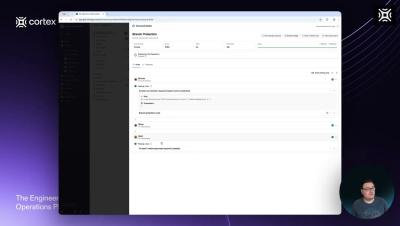
Cortex Scorecards + GitHub Rule Sets: Branch Protection at Scale
Stop guessing whether your repos meet your branch policies. Start knowing. In this Feature Friday, Senior Engineering Manager Gabriel walks through Cortex's new native support for GitHub branch rule sets and how to use them in scorecards to enforce consistent policies across all your repos. What you'll see: Questions? Reach out to your CSM or drop a comment below.

Customer lifetime value (CLV): formula, calculation, and how to improve it
Customer lifetime value (CLV) is the total revenue a business expects from a single customer over the entire relationship, minus the costs of serving them. The standard SaaS CLV formula: Average Revenue Per Account x Gross Margin % / Monthly Churn Rate. For a $500/month customer with 75% gross margin and 5% churn: CLV = $7,500. That number can swing materially once AI spend per customer is built into gross margin, something many SaaS companies still don't do.

The AI vendors just started watching the meter. CFOs need to watch the return.
On June 18, OpenAI gave ChatGPT Enterprise admins new credit usage analytics and spend controls. It’s a single view of credit consumption broken down by user, product, and model, default workspace budgets, per-group limits, and a Cost API for pulling the data into their own systems. Two days earlier, Microsoft shipped Copilot Cowork with spending limits, budget allocation, usage alerts, and user-level caps. This is a step in the right direction.

Ship Reliable AI Faster: How to Operate AI Agents with Control and Confidence
Replace "AI shipped on hope" with an operating model that holds up once real users depend on it. AI quality is multi-dimensional, covering accuracy, tone, safety, and faithfulness to user data, and can't be debugged from outputs alone. Without visibility into what their AI actually did in production, teams miss regressions, reverse-engineer chains by hand, and watch a single bad answer erode trust built over hundreds of right ones.