Mailchimp
Not subscribed to OpsMatters Newsletter


Welcome to this mini blog series on the low latency Linux kernel for industrial embedded systems! The real-time patch, which is not fully upstream yet, has had many developers wonder about stable alternatives for their projects adopting an embedded Linux operating system (OS) with latency requirements in the milliseconds’ range. The low-latency Ubuntu Linux kernel from Canonical is less costly to maintain than real-time alternatives.
Time series data differs from “normal” data in an interesting way. The essential characteristic is that the data’s primary point of reference is a timestamp showing at which point in time a sample of data was measured. Time series databases like InfluxDB are helpful for situations that involve this kind of data.
SIGNL4 integrates with various backend systems like IT monitoring, service management, IoT systems, sensors, etc. to automatically alert users and teams about certain incidents. A list of selected tools along with integration descriptions is available in our integrations section. How can you integrate SIGNL4 with your own tools? In the following we list some options offering different levels of sophistication.
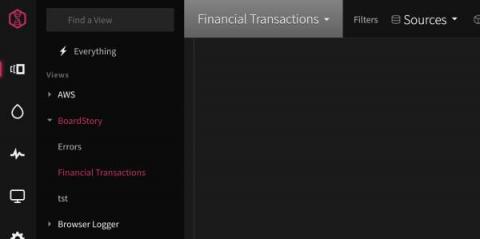
I’m Tim, a Product Design Manager at LogDNA. My team is responsible for creating a beautiful and easy-to-navigate user interface so that you can easily access, and gain value from, your logs. We’ve been working on making our product’s navigation more accessible and are rolling out a mixture of subtle and more noticeable changes.
JavaScript mutators shine among the improvements in Sensu Go 6.5 – they are both more effective and more efficient at transforming Sensu event data than pipe mutators. This post explores the advantages of JavaScript mutators and includes an example, but first, a brief review. In the Sensu observability pipeline, checks generate events, which Sensu then filters, transforms, and processes. A mutator is a component that transforms the event data.