Mailchimp
Not subscribed to OpsMatters Newsletter


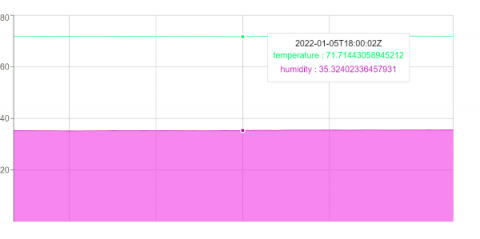
In this tutorial, you will learn how to create a custom data visualization with ReactJS using the Recharts charting library to display time series data stored with InfluxDB. To do this you will store some real-time data being recorded by some IoT sensors which record the temperature, humidity, and carbon monoxide levels of a room.
2021 was a great year for VictoriaMetrics! We delivered a lot of new features, our team doubled in size, and so did the list of public case studies written by VictoriaMetrics users as well as the community contributions to the product. See our 2021 Momentum blog post for details on all our achievements last year. All this wouldn’t be possible without our supportive community, their help, patience and creativity.
The 2021 year is finished, so it’s time to look at changes VictoriaMetrics has gained during the past year. The first release in 2021 was v1.52.0. The last release in 2021 was v1.71.0. More than 20 new releases of VictoriaMetrics were published during the 2021. The full changelog is available at this page. Let’s look at the most interesting changes.
VMware enables businesses of all kinds to set up and employ virtual machines (VMs) and servers. These virtual instances provide an abundance of benefits, such as faster speeds, reduced costs, and reduced downtime. However, they can also be quite difficult to manage. Without proper VMware monitoring software, these virtual instances can suffer severe performance loss.
2022 will be a watershed year for big data, AI and analytics, with more companies expecting tangible business results. But from IT’s vantage point, there is still much work to be done. Here are 10 New Year’s big data resolutions for IT. 1. Establish a data retention policy Many organizations have just kicked the can down the field, avoiding the big data retention discussion altogether.
The database/sql package in the Go standard library maintains a pool of connections so that all queries going through a single *sql.DB instance will reuse the same pool. This is great because you get a connection pool out of the box. But what if you need to share the same connection pool across processes? How do you use the same API in different processes but still reuse the same pool?
Ever since the pandemic hit the world in 2020, many businesses and institutions have begun to adopt cloud computing into their operations. With more employees working from home, companies have moved from on-site data centers and chosen cloud computing services. Although cloud computing is not new, its relevance has increased during the last year and has revolutionized how businesses and institutions are operating now.
Rancher Desktop has been in development for just over a year with the open question: when do we have a 1.0.0 stable release? Along the way the scope has expanded, it was ported to run in more places and the development team has grown. All of this happened as we worked out if Rancher Desktop would be useful for people, what features people want to use and what are good ways to build it. We are finally ready to answer that 1.0.0 question.