Mailchimp
Not subscribed to OpsMatters Newsletter


From the discovery of fire to the development of the internet, society’s need to communicate and live as a social unit has inspired endless innovation. Soon we'll be witness to the pinnacle of wireless technology: fifth-generation wireless networks (5G). By allowing users to communicate and share data at breakneck speed, 5G could prove to be a paradigm shift in information consumption and sharing.
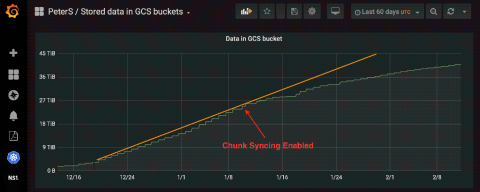
Several months ago, Bryan Boreham introduced a few changes to Cortex that massively reduced its storage requirements. The changes were quite simple and altogether had a nice benefit of using almost 3x less data storage than prior versions. Since Loki shares a lot of code with Cortex, could we use these ideas to the same effect? (Spoiler alert: Yes, we can!)
Today, we’ll dive deep into monitoring hosts. The good news is that we’ll point you to some shortcuts on how to set up host monitoring in an easy way. The bad news is that we won’t be doing any percussive maintenance on any host. To monitor hosts, you have to set a few layers in place. Doing all this by yourself would be the hard way. You may ask: “How hard could it be?”.
Kinesis is a managed, high-performance and large-capacity service for real time processing of (live) streaming data. Prominent users include Netflix, Comcast and Major League Baseball. Its design to let it grab data from multiple sources at the same time and to scale processing within EC2 instances.