Mailchimp
Not subscribed to OpsMatters Newsletter


We are happy to announce a new bugfix release for Icinga Web 2. Official packages are available on packages.icinga.com. Community repositories might need a while to catch up. You can find issues related to this release on our Roadmap.
It’s time to talk about the everyday challenges of serverless. Whenever I scroll through the latest blog posts on serverless it feels like there are only two types of problems in the field: how do I get started and how do I architect my solution. But what about all the day-to-day problems that developers and DevOps encounter when dealing with serverless? From simple deployment issues like protecting your stack from deletion to stress-testing your solution using serverless techniques.
If I’m used to metrics, how should I think about events in Honeycomb? This question cuts to the heart of how Honeycomb is different from other vendors in the APM and metrics space who claim to provide tools that help teams achieve observability, and we hear variations on it fairly often.
The rise of the hybrid enterprise is wreaking havoc on IT teams. IT service/operations management (ITSM/ITOM) is more challenging than ever, as infrastructure continues to become more complex, more involved, and more resource-intensive.
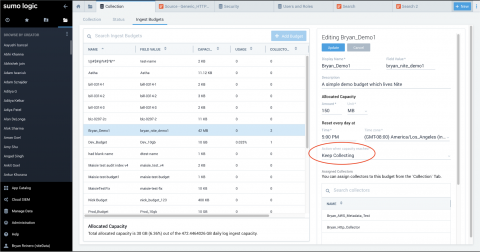
We are pleased to announce the release of Ingest Budgets, a new feature which enables our users to track and control how much data is ingested into Sumo Logic and avoid overages in environments where data ingestion can spike unexpectedly. With Ingest Budgets, users can create budgets with ingestion thresholds that either cap data ingestion to a daily limit or simply alert whenever the threshold is exceeded.
Perhaps you came upon this post while looking at ways to improve Symfony performance. Or maybe you read our comparison of Laravel and Symfony and want to know more. You could have gotten here because you want to write a performant app from the start. Then again, you could just love reading all of Stackify’s blog posts. And who could blame you? However you got to this post, or whatever goals you may have, I’m here to talk to you about Symfony performance tuning.
Last night we rolled out some new very inexpensive Micro Pro Plans. We've always provided a basic Free Plan alongside Pro Plans which have powerful features and allow monitoring of many websites.
Last month, AWS announced an initiative called Open Distro for Elasticsearch. Since then, there has been a lot of debate as to what this move means for the future of the ELK Stack and the community. What are the motives behind this move? Does this split actually signify a fork?
Today we launched a new open source project called k3OS. K3OS is a Linux distro built for the sole purpose of running Kubernetes clusters. In fact, it is a Linux distro and the k3s Kubernetes distro in one! As soon as you boot up a k3OS node, you have Kubernetes up and running. When you boot up multiple k3OS nodes, they form a Kubernetes cluster. K3OS is perhaps the easiest way to stand up Kubernetes clusters on any server.