Operations | Monitoring | ITSM | DevOps | Cloud

The latest News and Information on Cloud monitoring, security and related technologies.

MicroCloud LTS Demo

Canonical MicroCloud’s 2.1.0 LTS release features support for single-node deployments, improved security posture, and more flexibility during the initialization process. In this video we guide you through the new process, starting with deploying a MicroCloud on a single node, and then expanding with two additional members for a highly available cluster. Follow along and try it yourself.
What is a MicroCloud?

A MicroCloud is a new lightweight, featureful, and straightforward cloud for on-demand computing at the edge. MicroClouds differ from IoT which uses thousands of single machines or sensors to gather data, yet does not perform computing tasks. Instead, MicroClouds reuse proven cloud primitives with unattended, autonomous, and clustering features that resolve typical edge computing challenges.

How to Resolve the Disabled State Issue in Azure Logic App Standard?

In this video, Azure MVP Michael Stephenson introduces the auto-correct feature that automatically restores a disabled Logic App to its running state. Watch as Michael demonstrates how to monitor the app’s status, simulating the disabling process. The system detects the change, triggers alerts, and automatically reactivates the app, ensuring uninterrupted operation. Michael highlights the value of this feature in keeping Logic Apps running smoothly, even if they are accidentally turned off.

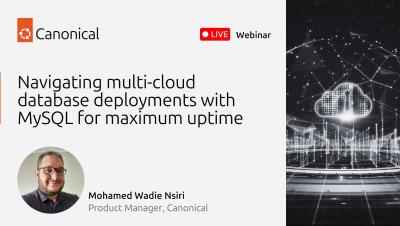
Navigating multi-cloud database deployments with MySQL for maximum uptime

Public cloud providers offer convenient services for database deployments. However, depending solely on a single provider’s database-as-a-service can result in vendor lock-in and reduce your system’s resilience against widespread outages affecting the provider. Instead, explore our approach to deploying MySQL across multiple clouds. A multi-cloud database strategy enables you to retain control of your infrastructure while enhancing overall resiliency and leveraging the unique strengths of each cloud provider.

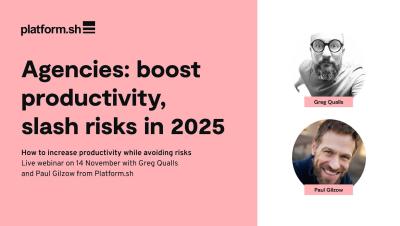
Digital agencies and devs | Boost productivity and slash risks in 2025

Boost productivity and reduce risks for agencies in 2025 | Cloud application platform, Platform.sh and Upsun Welcome to our insightful session on boosting productivity and reducing risks for agencies in 2025. In this video, Greg Qualls, a sales and business consultant with over 20 years of B2B experience, and Paul Gilzow, a Developer Relations Engineer, discuss the value a cloud application platform like Platform.sh or Upsun brings to agencies and their clients.

Precision at Scale: LightMesh Advanced Filtering

Tidal LightMesh introduces Advanced Filtering, a game-changing search feature empowering organizations to seamlessly search, analyze, and manage network data. This powerful tool gives users more control, efficiency, and insight, transforming the way networks are managed. With capabilities ranging from granular filtering to powerful bulk actions, it provides a comprehensive solution for modern network management challenges.

The Ultimate Guide to AWS Logging: Tools, Types, and Techniques

AWS logs are fundamental for organizations to conduct performance analysis, troubleshooting, security monitoring, and adhere to compliance requirements. But if you’re using more than one AWS service you can quickly realize that your logs are expanding out of control across decentralized locations. Therefore it’s crucial that you can process and analyze all your AWS logs within a single centralized repository.

Why Civo joined the Open Cloud Coalition

At Civo, we’ve always believed that the cloud industry should be fair, open, and accessible to companies of all sizes - not just the select few with deep pockets and large platforms. When the Open Cloud Coalition (OCC) was first proposed, we immediately saw it as an opportunity to cut through the noise and amplify the important voices of the cloud industry.

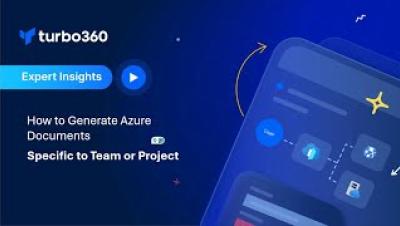
How to Generate Azure Documents Specific to Your Team or Project

This video aims to simplify the Azure documentation process for various teams within an organization. The Document Groups feature allows users to create groups specifically for different teams, applications, or departments, making documentation more organized and accessible. With a modified tree view, users can create and manage documentation tailored to their specific team or project needs.

Autoscaling Amazon EKS with Karpenter: A Step-by-Step Guide

Managing resource scaling in EKS clusters can quickly become complex, especially with fluctuating workloads. Traditional autoscaling solutions often require predefined configurations, which can lead to inefficiencies and unnecessary costs. This is where Karpenter comes in—a powerful, open-source project designed to dynamically manage and scale nodes in response to real-time application demands.