Operations | Monitoring | ITSM | DevOps | Cloud

The latest News and Information on Containers, Kubernetes, Docker and related technologies.

Multi-cluster management and observability with KubeSphere

Join us as we learn about KubeSphere - a distributed operating system for cloud-native application management. Feynman Zhou (Dev Advocate) from the KubeSphere team will walk us through the rich observability features of KubeSphere and how it integrates your favourite tools for multi-dimensional monitoring metrics, multi-tenant log query and collection, alerting, events, audit logs and notification.

Kubernetes throttling? It doesn't have to suck!

Kubernetes has a bad habit of throttling CPU resources—with the result that you can suffer severely degraded performance or find yourself paying a fortune for extra, unnecessary infrastructure. Watch this video to learn how K8s clusters protect themselves from what they see as heavy CPU usage, and how you can monitor and troubleshoot the problem. We demonstrate how you can:– Use Netdata to reduce API response times by a factor of 7– Expect to reduce infrastructure resource requirements by 60-75%

Canonical Kubernetes 1.24 is now generally available

We consistently follow the upstream release cadence to provide our users and customers with the latest improvements and fixes, together with security maintenance and enterprise support for Kubernetes on Ubuntu. This blog is a quick overview of the latest development highlights that are made available in Canonical Kubernetes 1.24 as well as a look at our favourite upstream enhancements.

Kubernetes Multi-Tenancy

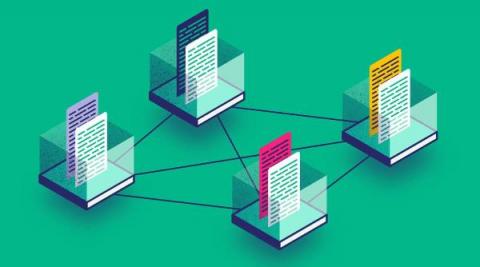
Things would be much simpler if we based all we built on Kubernetes on a single tenant type of architecture, meaning a single application running on the entire Kubernetes cluster with a single team who could access it. As teams scale Kubernetes adoption within their organizations, they see a different scenario instead, one with multi-tenant deployments performed by multiple teams and, most probably, across multiple clusters.

Using Rancher Desktop for Local Kubernetes Development

Rancher Desktop is an all-in-one solution for container management on your desktop workstation. It provides an easily maintained Kubernetes installation that runs on your local machine and streamlines setting up containerized workflows in development. Assembling a Kubernetes cluster from scratch can be daunting, because multiple components must work in unison. With Rancher Desktop, you get everything preconfigured with one software download.

AWS Summit London - My top 3 sessions

Hi, fellow Qovery readers, Albane here! 👋 To give you a bit of background, I joined Qovery in August 2021, initially as a Product Owner, then moved to a Product Marketing Manager position in March 2022. So yes, I’m all about our product. However, I also spend much time learning about our partner’s products, and that’s why, on April 27, 2022, I spent the day at the ExCel Centre in London to attend the annual AWS Summit.

Kubernetes Throttling Doesn't Have To Suck. Let Us Help!

In the Kubernetes (K8s) community, there is a huge misconception about CPU allocation and utilization. Even highly experienced SREs find themselves struggling with the way Kubernetes allocates CPU resources, leading to misconfigured CPU allocations and extremely negative outcomes. For starters, this results in significant quality degradation on important service components, introduced by behind-the-scenes CPU limiting (or throttling).