Operations | Monitoring | ITSM | DevOps | Cloud

The latest News and Information on Containers, Kubernetes, Docker and related technologies.

From lightweight to featherweight: MicroK8s memory optimisation

If you’re a developer, a DevOps engineer or just a person fascinated by the unprecedented growth of Kubernetes, you’ve probably scratched your head about how to get started. MicroK8s is the simplest way to do so. Canonical’s lightweight Kubernetes distribution started back in 2018 as a quick and simple way for people to consume K8s services and essential tools.

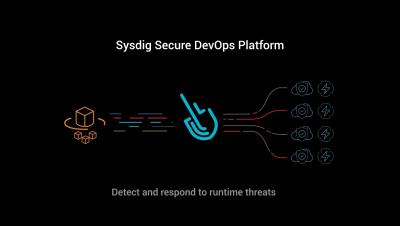
Unveil hidden malicious processes with Falco in cloud-native environments

Detecting malicious processes is already complicated in cloud-native environments, as without the proper tools they are black boxes. It becomes even more complicated if those malicious processes are hidden. A malware using open source tools to evade detection has been reported. The open source project used by the malware is libprocesshider, a tool created by Sysdig’s former chief architect Gianluca.

Multi-instance GPU (MIG) with MicroK8s on NVIDIA A100 GPU

Although Kubernetes revolutionised the software life cycle, its steep learning curve still discourages many users from adopting it. MicroK8s is a production-grade, low-touch Kubernetes that abstracts the complexity and can address use cases from workstations to clouds to the edge. We’ll highlight the details of MicroK8s’ simplicity and robustness and demonstrate the different usage scenarios, running it on NVIDIA DGX, EGX, DPU and Jetson hardware using real applications from NVIDIA marketplace.

Kubernetes Master Class - How to Update Monitoring After Upgrading to Rancher 2.5

Rancher 2.5 introduces a new, improved monitoring integration. It is still based on Prometheus, Grafana and Alertmanager, but much more flexible regarding configuration options and customizations. It also directly ships with much improved dashboards and alerting rules. Unfortunately, due to the necessary internal changes, there is no automatic upgrade path available from the old to the new monitoring. While you can continue to use the old monitoring with 2.5, there are some manual migration steps necessary to get all the benefits from the new monitoring system and keep all the configurations and customizations from the old one.

A Guide to Kubernetes Certifications

In an age of virtualization and cloud computing, developers increasingly use Kubernetes’ open-source platform to manage containerized workloads and services. Kubernetes container became popular because it was impossible to define a resource boundary for multiple applications in a traditional CPU environment. Misuse of resources created an inefficient environment.