The latest News and Information on DevOps, CI/CD, Automation and related technologies.
Reliability and chaos might seem like opposite ideas. But, as Netflix learned in 2010, introducing a bit of chaos—and carefully measuring the results of that chaos—can be a great recipe for reliability. Although most software is created in a tightly controlled environment and carefully tested before release, the production environment is harsher and much less controlled.
Instrumental has made the decision to shut down its platform starting August 2022 including its application, servers, and all related APIs being shut down. Users will need to migrate to another solution or risk all their data being permanently deleted! But Instrumental users need not fret!
What if there was a way to deploy a new feature into production — and not actually turn it on until you’re ready? There is! These tools are called feature flags (or feature toggles or flippers, depending on whom you ask). Feature flags are a powerful way to fine-tune your control over which features are enabled within a software deployment. Of course, feature flags aren’t the right solution in all cases.
With ARM based dev machines and servers becoming more common, it is become increasingly important to build Docker images that support multiple architectures. This guide will show you how to build these Docker images on any machine of your choosing.
Docker is a platform as a service product. With Docker, you can easily deploy applications into Docker containers. Containers are software "packages" that bundle together an application's source code with its libraries, configurations, and dependencies. This helps software run more consistently on different machines. To use Docker containers, you need to understand how Docker networking works. Below, we'll answer the question: "what is Docker network host?". We'll also take a look to see how it works.
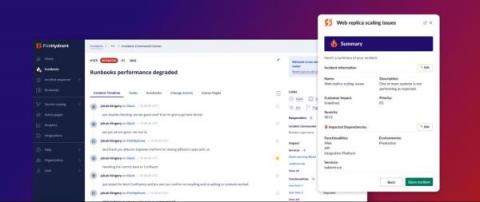
Today we’re releasing fully redesigned Slack and Command Center experiences for FireHydrant so anyone on your team can intuitively navigate the incident response process — in the app or on the web. There are many things you can do ahead of an incident to help things run smoothly: design and document your process, automate predictable steps, train the team, and run drills.