Operations | Monitoring | ITSM | DevOps | Cloud

The latest News and Information on DevOps, CI/CD, Automation and related technologies.

DevOps 101: How to kick-start your DevOps initiative

This is the third part of my DevOps 101 series, so before we get going, let’s do a quick recap of what we’ve covered previously In DevOps 101: What, who, why, and how, I talked about how the definition from Microsoft’s Donovan Brown encapsulates DevOps succinctly as: The union of people, process, and products, to enable the continuous delivery of value to the end users.

Ingest OpenTelemetry traces and metrics with the Datadog Agent

OpenTelemetry is a Cloud Native Computing Foundation (CNCF) initiative that provides open, vendor-neutral standards and tools for instrumenting services and applications. Many organizations use OpenTelemetry’s collection of APIs, SDKs, and tools to collect and export observability data from their environment to their preferred backend. As part of our ongoing commitment to OpenTelemetry, we are proud to have contributed our distributed tracing libraries to the CNCF community.

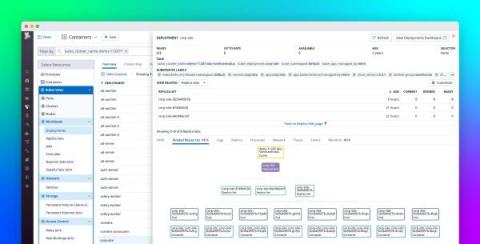
Visualize relationships between your Kubernetes resources with Datadog Live Containers

A Kubernetes environment includes a wide range of resources—such as clusters, nodes, and pods—that work together to run dynamic applications at scale. In order to monitor a Kubernetes application effectively, you need a multi-dimensional view into your clusters’ health that encompasses the complex dependency relationships among these resources.

How to empower your team to own incident response

Responding to and managing incidents feels fairly straightforward when you’re in a small team. As your team grows, it becomes harder to figure out the ownership of your services, especially during critical times. In those moments, you need everyone to know exactly what their role is in order to recover fast. Moving to incident.io as the 7th engineer, from a scaleup of around 70 engineers, has given me a new perspective on what it means to own your code.

Hybrid Cloud Dominates and Security Tops the To-Do List in Canonical's 2022 Kubernetes and Cloud Native Operations Survey

Released today, data from more than 1,300 global respondents combines with expert analysis to reveal goals, benefits, and challenges of cloud-native technology in 2022 16 May 2022 – Canonical, the maker of Ubuntu, today released data from a new global survey revealing the goals, benefits, and challenges of cloud-native technologies.

Container Cost Management: Allocating Kubernetes Costs The Easy Way

Containers are one of the most popular ways for businesses to deploy applications. They provide an easy method of packaging applications into self-sufficient units that can be used, moved around, and re-used in any number of ways without breaking the overall functionality of your software. With the possible exception of serverless architecture, containerization is perhaps the best way to achieve smooth, seamless application deployment and minimal hassle with updates and application maintenance.

Deploying K3s with Ansible

There are many different ways to run a Kubernetes cluster, from setting everything up manually to using a lightweight distribution like K3s. K3s is a Kubernetes distribution built for IoT and edge computing and is excellent for running on low-powered devices like Raspberry Pis. However, you aren’t limited to running it on low-powered hardware; it can be used for anything from a Homelab up to a Production cluster.