Welcome to the "New Normal" for Your Software Supply Chain
The new world is “always-on,” hyper-connected, massively distributed, and moving at an accelerated “near-real-time” pace.


The latest News and Information on DevOps, CI/CD, Automation and related technologies.
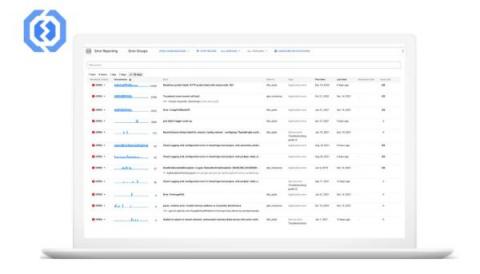
Here at incident.io, we provide a Slack-based incident response tool. The product is powered by a monolithic Go backend service, serving an API that powers Slack interactions, serves an API for our web dashboard, and runs background jobs that help run our customers incidents. Incidents are high-stakes, and we want to know when something has gone wrong. One of the tools we use is Sentry, which is where our Go backend send its errors.
It’s one of those questions that’s tossed around the internet quite regularly. “Is DevOps dead?” Is there a genuine reason to think that DevOps is on its last legs? Or are authors just trying to get clicks by making controversial statements? Let’s look at some of the main justifications given for raising this question: I’ll come back to these points shortly.
Click below to read other articles from our CLI intro series: At the beginning of this series, we looked at the benefits of using the CLI shell on your machine. One of those benefits is the wide range of developer tools available that only have a CLI. In this part of the CLI intro series, we’re going to focus on.
Building new applications is a lot of fun, but troubleshooting and fixing the crashes that can come with app development is not. While many organizations are fast adopting the DevOps model, there are still some legacy frameworks where developers and operations teams are separate. Developers build and submit apps to their ops team, who in turn deploy and maintain the production stack. A common issue that arises due to this workflow is the time it takes to find and resolve crashes.
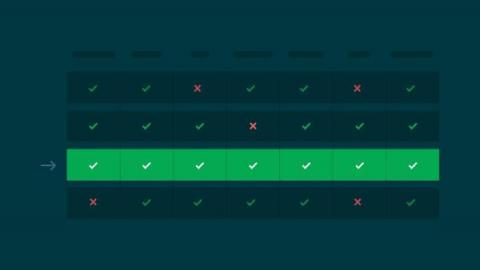
End-to-end testing, also known as E2E testing, is a methodology used for ensuring that applications behave as expected and that the flow of data is maintained for all kinds of user tasks and processes. This type of testing approach starts from the end user’s perspective and simulates a real-world scenario. For example, on a sign-up form, you can expect a user to perform one or more of these actions: You can use end-to-end testing to verify that all these actions work as a user might expect.
When incidents inevitably occur in your software stack, managing them well could be the difference between losing customers and building trust with them. In this article, we’ll give you and your team some best practices on how to prepare for managing incidents. It’s crucial to define service ownership, a declaration process, and practice all of it. With a little planning now, you'll be able to cut your incident response time drastically.