Operations | Monitoring | ITSM | DevOps | Cloud

The latest News and Information on DevOps, CI/CD, Automation and related technologies.

Introducing new integrations to make it easier to monitor Vault with Grafana

HashiCorp Vault is an increasingly popular multi-cloud security tool that allows users to authenticate and access different clouds, systems, and endpoints, and centrally store, access, and deploy secrets. At Grafana Labs, we’re always looking for ways to make it easy for our community to get started monitoring important parts of their systems. So we’re happy to share some new integrations that will help our users get the most out of Grafana + Vault.

How DevOps Can Reduce the Runaway Waste and Cost of Autoscaling

Autoscaling is the process of automatically increasing or decreasing the computational resources delivered to a cloud workload based on need. This typically means adding or reducing active servers (instances) that are leveraged against your workload within an infrastructure.

Learn How to Simplify Kubernetes Performance Management | Pepperdata

Complex applications running on Kubernetes scale super fast, but this can create visibility gaps that can make detecting and troubleshooting Kubernetes issues as difficult as finding a needle in a haystack. Although Docker and Kubernetes are now becoming standard components when building and orchestrating applications, you’re still responsible for managing the performance of applications built atop this new stack.

Datadog Cloudsmith Integration

Cloudsmith is happy to announce an integration with Datadog to help our customers monitor their Cloudsmith account. Datadog is an observability service for cloud-scale apps, providing monitoring of servers, databases, tools, and services through a SaaS based data analytics platform. At Cloudsmith we are big fans of Datadog and use it to monitor and visualize how our system is performing across a range of services and tools.

Kubernetes Fully Managed: Overcoming CIOs challenges

Kubernetes is everywhere! In the public and private cloud, and from the enterprise to startups, the majority of IT executives around the world have explored Kubernetes, and how it has evolved the way many organisations are developing and deploying their applications. But what is scary about it, and how can organisations better leverage one of the greatest tools in the field while overcoming the biggest challenges facing CIOs when adopting Kubernetes?

The 3 Best Ways To Talk To Your C-Suite About Cloud Costs

For any company working in the cloud or using managed cloud services to create products, cloud costs represent a significant expense. If you lead an engineering team, you may have to defend your bill to your CEO or CFO. But here’s the challenge: Cloud costs can be difficult to communicate because engineers and executives often think about cost from different perspectives. As an engineer, you may think of costs in terms of AWS services, such as EC2 instances, storage, etc.

More Clouds, More Tools, More Problems

Organizations need tools to manage their infrastructure, which today is expanding beyond the data center to include multiple public clouds. In fact, in a recent survey of hybrid cloud decision makers, we found that the vast majority of respondents (88%) have placed more than one-quarter of their workloads in the public cloud, and 44% indicated that they’re running more than half of their workloads in the public cloud.

Ubuntu Pro-based Microsoft SQL Server Instances available for Azure

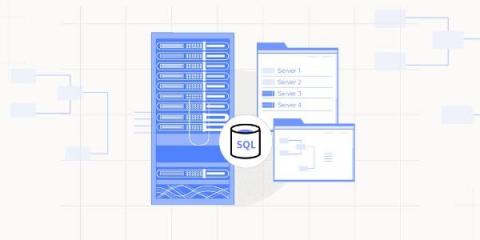
1st November 2021: Today, Canonical announced support with Microsoft for Microsoft SQL Server with Ubuntu Pro on Microsoft Azure. Canonical has worked with Microsoft to bring a highly performant and fully supported solution for SQL Server to market, based around the Ubuntu Pro 20.04 LTS operating system.

Securing the Open-Source supply chain with Ubuntu Pro on Google Cloud

It’s official: since the outbreak of the COVID-19 pandemic, cybercrime has increased by 600%. Among these, ransomware attacks are estimated to cost $6 trillion in 2021 alone. And there were nearly 550,000 ransomware attacks per day in 2020. The question is: are your workloads secure enough? In this blog, we will discuss how to make your Open Source workloads more secure in one second.