Operations | Monitoring | ITSM | DevOps | Cloud

The latest News and Information on DevOps, CI/CD, Automation and related technologies.

The JFrog Platform - End-to-end DevOps Solution

Manage your DevOps pipeline from a single pane of glass. The JFrog Platform provides a universal end-to-end solution that integrates with your ecosystem to orchestrate and optimize all key processes in your CI / CD pipeline. Deliver fearless updates from code to the edge in self-managed, on-prem, hybrid, and multi-cloud environments.

Rancher 2.5 Embraces GitOps at Scale with Rancher Continuous Delivery

The ability of Kubernetes to easily deploy and manage containerized software has given organizations tremendous capabilities in their cloud services, with clusters multiplying into the hundreds or thousands and extending out to the edge for any number of purposes. But its growing popularity has also led to challenges in managing complexity in an environment that is conducive to cluster sprawl.

Rancher 2.5 Delivers On "Computing Everywhere" Strategy

Despite the lockdown restrictions of the last six months, I'm delighted to announce that we've released Rancher 2.5 on schedule today. This latest release represents another major milestone of Rancher's "Computing Everywhere" strategy by delivering management capabilities that match the extraordinary popularity of Amazon EKS and our lightweight Kubernetes distribution, K3s.

Rancher 2.5 Delivers Enhanced Full Lifecycle Management of EKS Clusters

Amazon EKS is the most popular managed Kubernetes solution. DevOps teams can quickly spin up clusters in the cloud and get started with Kubernetes in a few clicks. As organizations embrace Kubernetes in the cloud, the challenge becomes managing clusters across multiple regions or accounts. At that point, organizations struggle to visualize all of their clusters.

Introducing RancherD: A Simpler Tool for Deploying Rancher

As part of Rancher 2.5, we are excited to introduce a new, simpler way to install Rancher called RancherD. RancherD is a single binary you can launch on a host to bring up a Kubernetes cluster bundled with a deployment of Rancher itself. This means you just have one thing to manage: RancherD. Configuration and upgrading are no longer two-step processes where you first have to deal with the underlying Kubernetes cluster and then deal with the Rancher deployment.

Monitor code deployments with Deployment Tracking in Datadog APM

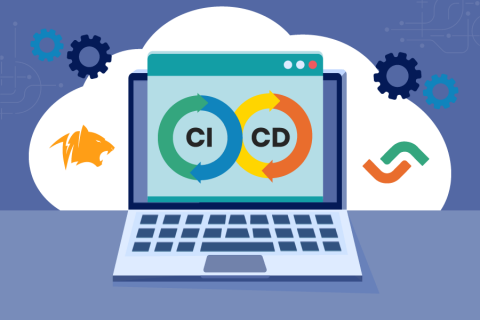
Continuous integration and continuous delivery (CI/CD) pipelines have become fundamental to modern software development and code deployment. Implementing CI/CD practices can let teams deploy code more quickly and efficiently. But with these methods come a number of new challenges: bad code deploys are a major source of downtime and can lead to a loss of revenue and customer trust.

Canonical expands collaboration with NVIDIA to bring AI to the edge

Canonical has been working closely with NVIDIA for many years to fuel innovation and support open source software with the power of accelerated processing. That already allowed us to jointly deliver GPU acceleration into Linux, OpenStack and container workloads on traditional datacenter servers. We continued working together, with Ubuntu forming the base operating system for NVIDIA DGX systems, including the latest NVIDIA DGX A100 system.

How Serverless is an emerging Software Architecture?

Software development has greatly evolved over the years. Serverless is an emerging software architecture that could resolve issues when it comes to developing software solutions. As software developers, you’re tasked with server setup, installing the software, operating systems requirements, server management and maintenance, designing an application with high fault tolerance and availability, as well as managing load balance and more.

Rethinking Ops

Looking back at my years working with infrastructure and going through it’s changes, I believe its time we start to rethink Operations because clearly this model of Ops as cluster or infrastructure admins does not scale. Developers will always out-demand their capacity to supply. Either your headcount is out of control or your ability to innovate and deliver is severely hamstrung. Operations becomes this interrupt-driven thing where we’re just fighting fires as they happen.