Automatic deploys to Kubernetes through Gitlab CI/CD - Johannes Tegnér
Recorded on Wednesday 29th July 2020 By Johannes Tegnér


The latest News and Information on DevOps, CI/CD, Automation and related technologies.
Time trolls people. It speeds up in good times and slows down in bad. For instance, when you push code, your brain feels like it’s in a whirlwind. But when you’re debugging subsequent errors, the hours seem to slog by. This is particularly true if you are operating without context and without the help of automation. Fortunately, our friends at GitHub built an automation platform for products like Sentry to integrate with: Sentry Release GitHub Action.
As the automation surface area grows to accommodate hundreds of interconnected APIs on the cloud, developers are using their own, home-grown “digital duct tape” to manage a growing “DevOps dumping ground”. For a lot of organizations, home-grown glue logic is inconsistent, not repeatable, and expensive to maintain hundreds of event-based workflows and thousands of combinations. We believe that the answer lies in automation workflows.
There’s no getting around the prevalence of heterogeneous tools in IT operations and DevOps. Teams have built up ecosystems of tools over time for different infrastructure, workflows and applications – and while some of them are outdated or duplicitous – plenty still serve a useful purpose in the enterprise. Yet unfortunately tool sprawl adds to the complexity of monitoring a hybrid or multi-cloud environment.
Monitoring the state of DevOps, multi-cloud, microservices and data centre environments is no easy task. You can’t manage what you can’t see. Gaps in your monitoring capability leave your enterprise vulnerable to catastrophic, customer impacting infrastructure blind-spots.
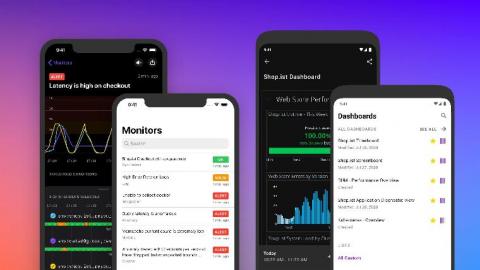
When you’re on call and get paged at an inconvenient time, you need to be able to quickly determine the seriousness of the issue and act decisively to reduce system downtime. But pager notifications often don’t give you the information you need to investigate an issue from your mobile device, meaning that access to a laptop at all times is a must.