Operations | Monitoring | ITSM | DevOps | Cloud

The latest News and Information on Cloud monitoring, security and related technologies.

Are you lost in the cloud? A practical guide to cloud migration strategy

What's in this article? For over a decade, the enterprise IT narrative was simple: move everything to the public cloud. Yet as enterprise architectures have matured, many UK technology leaders have discovered that hyperscale cloud environments do not always deliver the outcomes they expected. The promises of seamless scalability and lower total cost of ownership often come with trade-offs that become more apparent over time.

Background AI agents, meet task containers

Task containers are now generally available on Upsun Cloud, giving you a place to run AI agents alongside the rest of your application. The agent runs as a container inside your Upsun Cloud project, next to the app it works on, with the same access to your environment and data as everything else deployed there. The lifecycle is the part that's new: it fits how agent workloads behave instead of forcing them to pretend to be servers. A few things up front: This is a hands-on guide.

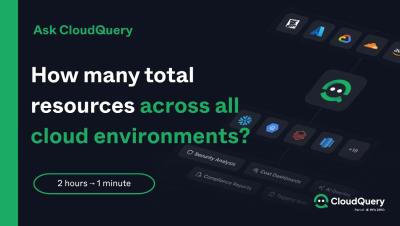
Multi-Cloud Asset Inventory in 1 Minute

How many resources do you actually have across every cloud provider? Manually, that's a ~2 hour job. With CloudQuery, it's one question. In this clip we ask the CloudQuery AI assistant a single question —"Show count of all resources across all cloud providers" — and get a full multi-cloud asset inventory back in about a minute: Wiz 9,225 · GCP 6,485 · AWS 2,297 · Azure 1,153 · Entra ID 1,109 · Kubernetes 1,066 · Backstage 75 → 21,410 total resources.

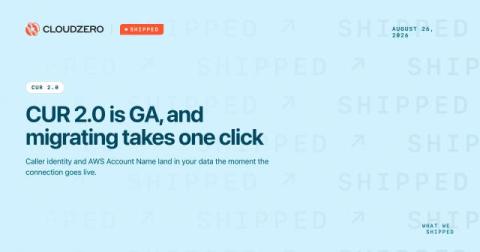
Shipped: CUR 2.0 is GA, and migrating takes one click

CUR 2.0 is generally available and on by default, so every AWS connection you make now starts with the richest billing data AWS offers. That richness is important. CUR 2.0 carries AWS caller identity, which is what puts Bedrock and other AI spend on the role that drove it instead of leaving it as one number in your bill. It also populates AWS Account Name automatically. Both of those are yours the moment the connection is live. Getting there is a single step now.

GitHub Copilot Enterprise pricing [2026]: seats, AI credits, and the September cliff

GitHub Copilot Enterprise pricing is $39 per user per month, and since June 1, 2026, each seat includes $39 in monthly GitHub AI Credits, pooled across your whole organization and consumed by token usage at per-model rates. The seat price is fixed. The bill is not: usage beyond the pooled credits is charged on top, which is why the real Enterprise question in 2026 isn't the price per seat. It's your engineers' token consumption.

The End Of Cloud-First: What's Driving The Shift To Hybrid Infrastructure

For more than a decade, the prevailing wisdom in enterprise IT was simple: move everything to the public cloud. Hyperscale platforms promised unlimited scalability, lower costs, agility and freedom from the burdens of managing infrastructure. Cloud-first has been rapidly gaining momentum as the de facto path to a modern digital footprint. Until now.

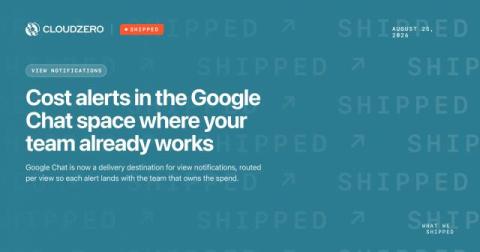
Shipped: Cost alerts in the Google Chat space where your team already works

If your company runs on Google Workspace, your team lives in Google Chat. That is where the standup happens and where threads turn into decisions. Cost alerts can now go there too. This is relevant because an alert only does something if it reaches people in a place where they can talk about it. Email is great for a record but not great for a reaction. An anomaly notification sitting in an inbox waits for that person to open it, decide it is real, and then go tell everybody else.

The AI trust dial: from local agents to autonomous software factory

There are many conversations about the use of AI, particularly how engineering teams are using it in their coding workflows. Manual work is being replaced by agent-driven automation, and human value increasingly lies in the higher-order work: writing specs, thinking through architecture, steering the direction, exercising taste, and reviewing the output.

Kubernetes Resource Optimization Platforms: Top Vendor Comparison

Table of Contents Kubernetes resource optimization appears to be a single problem, but the platforms that address it disagree on almost every design decision, starting with how they analyze workload demands. Some set CPU and memory requests from live signals, while others learn a workload’s historical pattern and provision ahead of it.